Arabi Facts Hub
is a nonprofit organization dedicated to research mis/disinformation in the Arabic content on the Internet and provide innovative solutions to detect and identify it.
From Solidarity to Incitement: A Digital Campaign Calls for Expatriate Deportation Coinciding with the Bombing of US Bases in the Gulf
Mar. 24, 2026 | AFH
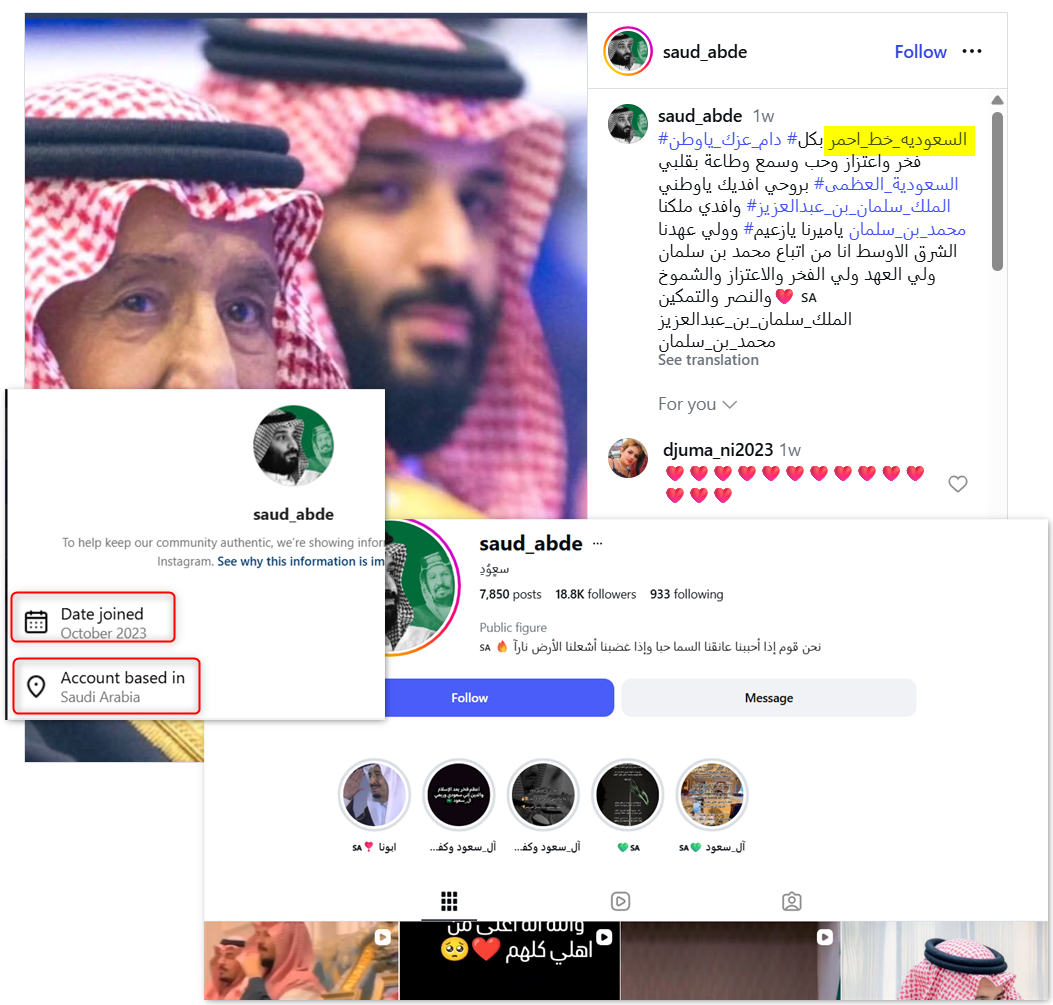
Prior to the US-Israeli military operation against Iran a coordinated digital campaign emerged on social media, promoting the Saudi regime with the hashtag #السعودية_خط_احمر (Saudi Arabia is a Red Line). The campaign, which initially focused on supporting the Saudi regime, swiftly morphed into a security-driven effort calling for the deportation of expatriates.
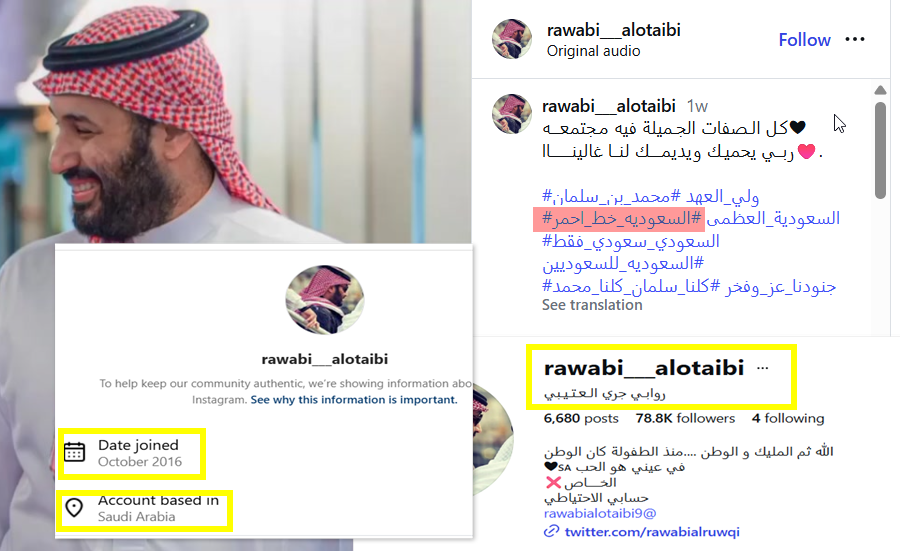
With the start of the military operation against Iran, followed by the Iranian response that targeted military bases in the Gulf countries, the hashtag, along with several other hashtags, such as: #امن_الخليج_خط_احمر (Gulf security is a red line), #امن_الامارات_خط_احمر (UAE security is a red line), #امن_قطر_خط_احمر (Qatar security is a red line), turned into a campaign of support and solidarity with the Gulf countries, interspersed with speeches that included autocratic tendencies and hateful content, in addition to demands to deport workers and expatriates in those countries.
“The Gulf’s Security is A Red Line”: A Hashtag Promoted by Fake Accounts
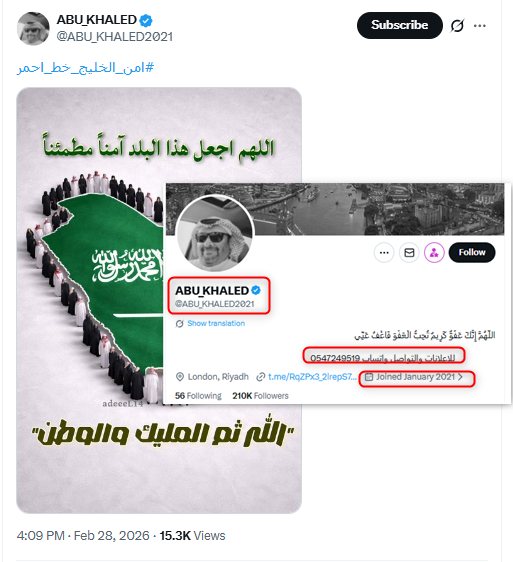
Coinciding with Iranian rockets targeting American bases in the Gulf states, the hashtag #امن_الخليج_خط_احمر (Gulf security is a red line) appeared on X on February 28th. It was published by a Saudi account named "ABU_KHALED @ABU_KHALED2021," which is a commercial account with a phone number in its description "for contact and advertising."
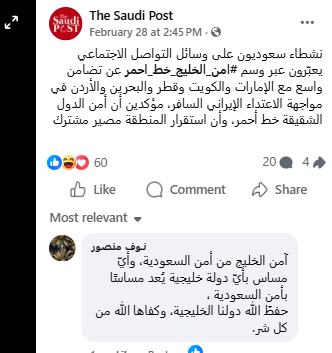
Later, a news page on Facebook called The Saudi Post reposted the hashtag, stating that Saudi activists had launched it to express "broad solidarity with the UAE, Kuwait, Qatar, Bahrain, and Jordan in the face of Iranian aggression."
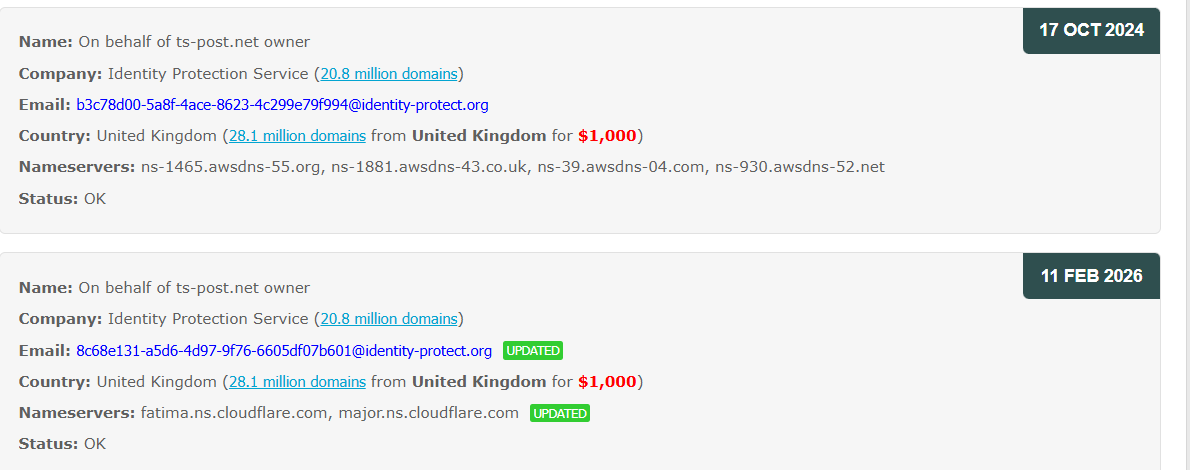
Although the newspaper's account on X is active in Saudi Arabia, an examination of the website's electronic domain showed that it is registered in the United Kingdom.
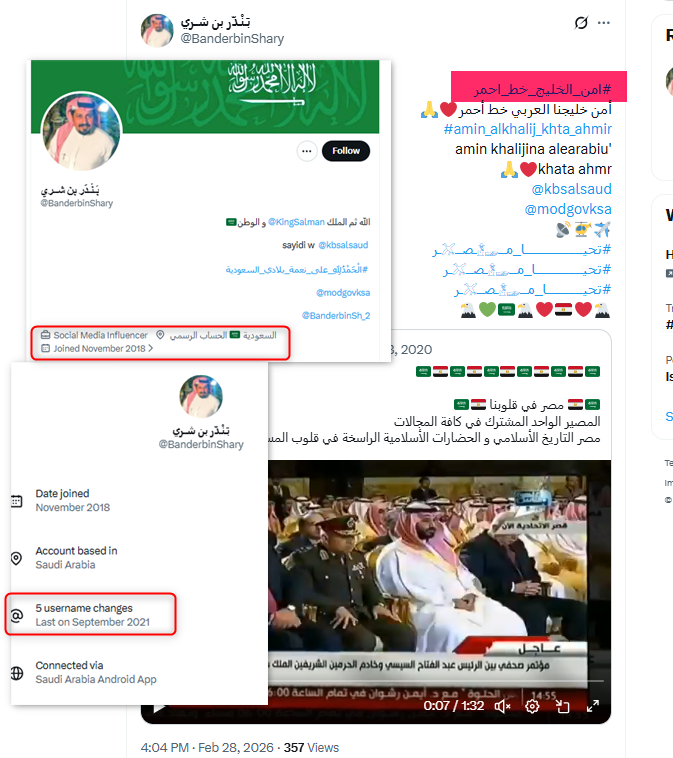
On the same day, an account on X named "Bander bin Shary @BanderbinShary" posted a tweet that included the hashtag #امن_الخليج_خط_احمر (Gulf security is a red line), and then repeated the same phrase in English letters twice in a distorted format, which suggests the tweet may have been posted automatically. An examination of the account revealed that it is dedicated to political propaganda and operates from Saudi Arabia, and the transparency feature showed that it had changed its name five times.
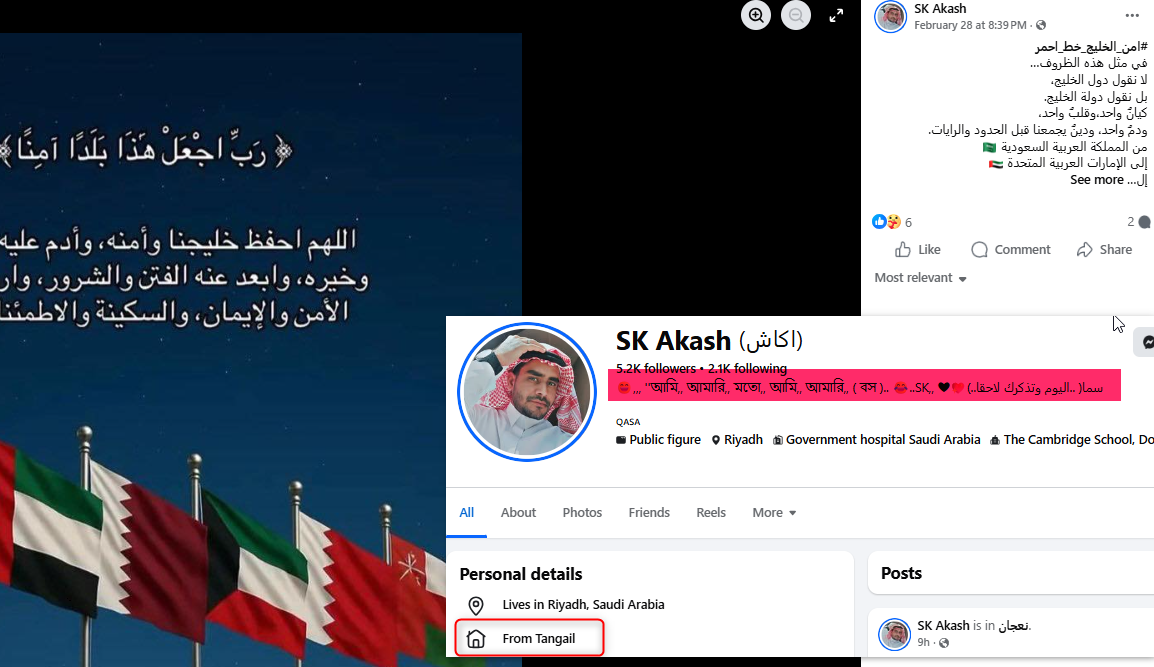
After the launch of the hashtag “Gulf security is a red line”, several accounts began re-publishing it with the aim of amplifying and increasing its spread. Among the accounts that contributed to this was an account on Facebook named "اكاش SK Akash," which is an account active from Saudi Arabia, but originally belongs to a Bangladeshi resident in the Kingdom.
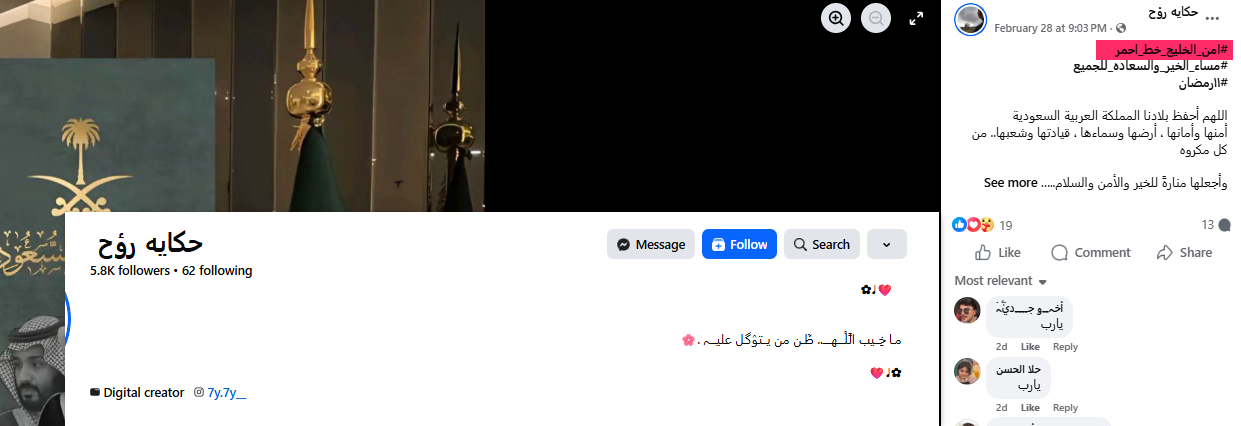
Other Saudi commercial pages also reposted the hashtag, such as "Hikayet Rouh" (Rouh’s Story), a page that previously published non-political content but participated in spreading and amplifying the hashtag after it appeared.
Campaign Indicators
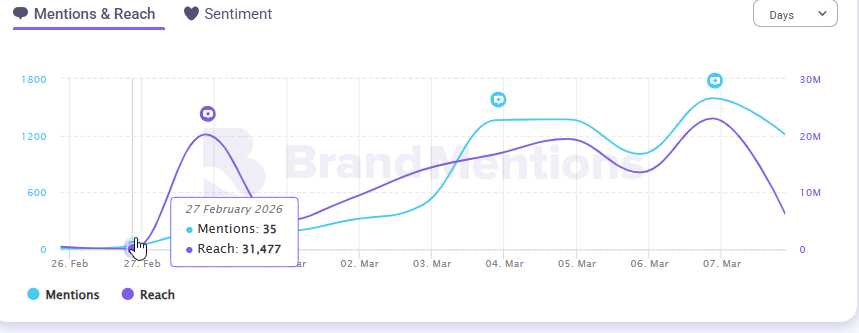
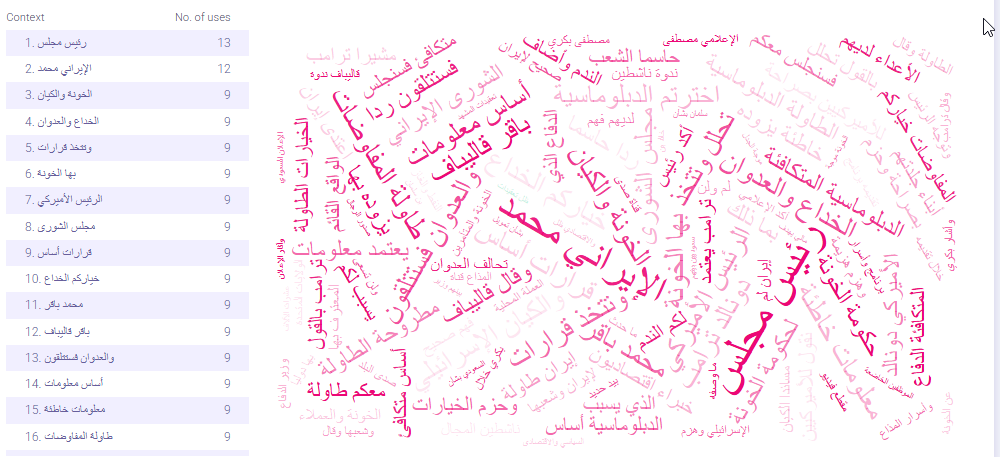
The campaign began simultaneously with the start of the war on Iran, with the number of posts reaching its first peak on March 4th, and then reaching its largest peak on March 7th, bringing the total number of posts to about 7,900.
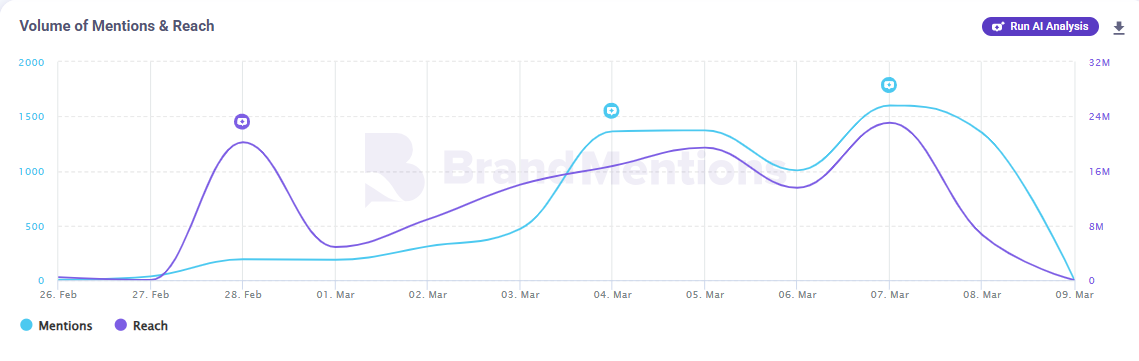

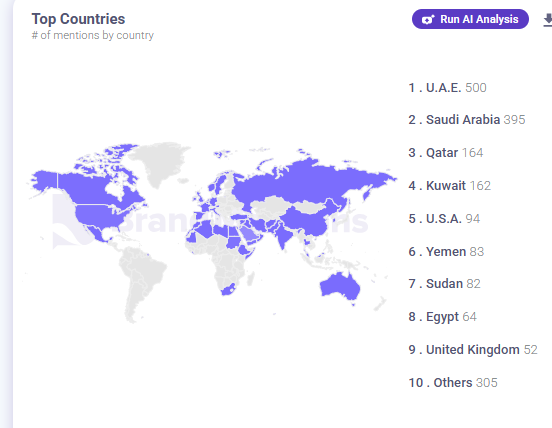
Despite this relatively limited number, the campaign achieved wide reach, estimated at approximately 128 million impressions, with nearly 1.3 million interactions in less than a week. Data showed that the tweets were first published from the UAE, then Saudi Arabia, followed by Qatar and Kuwait, indicating that the campaign is primarily Gulf-centric.
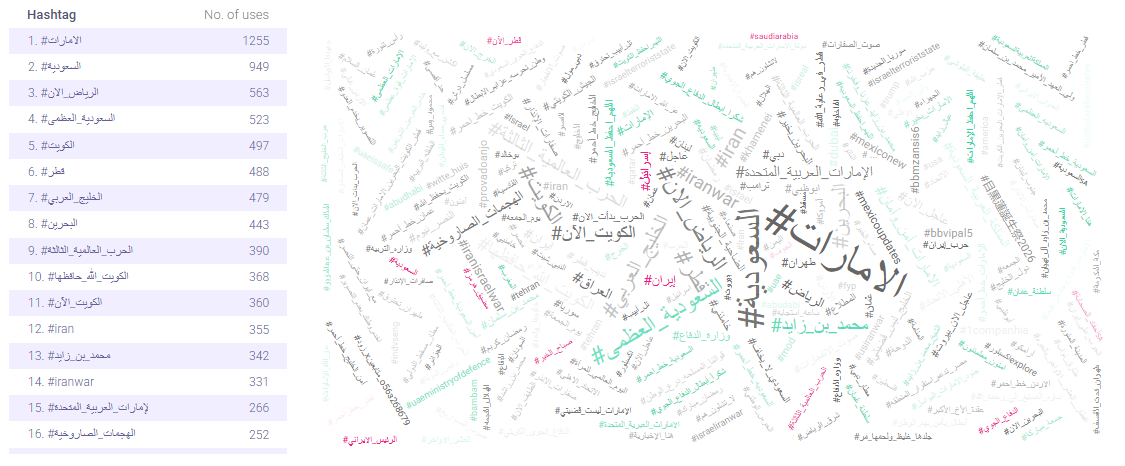
The geographical distribution of the campaign’s posts was reflected in the cloud of the most used words and hashtags, with words and hashtags appearing such as: الامارات (Emirates), السعودية (Saudi Arabia), الرياض_الان (Riyadh Now), السعودية_العظمى (Great Saudi Arabia), الكويت (Kuwait), قطر (Qatar), الخليج العربي (Arabian Gulf), البحرين (Bahrain), الحرب_العالمية_الثالثة (World War III), الكويت_الله_حافظها (Kuwait, God Protect It).
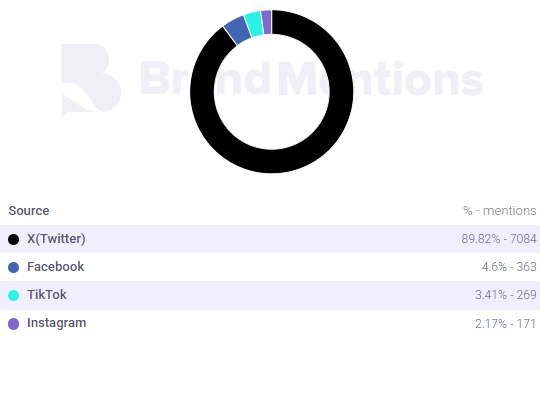
X captured the largest share of the campaign's posts, at about 90%, followed by Facebook with nearly 5%, and then Instagram and TikTok with smaller percentages.
Most Interactive Accounts
Analysis showed that the list of accounts most interactive with the campaign's hashtags is mostly dominated by fake or inauthentic accounts. The most interactive account was one named "Great Emirates @m461," an Emirati account that published 103 tweets, which included the hashtag "#الامارات_خط_احمر" (UAE is a red line).
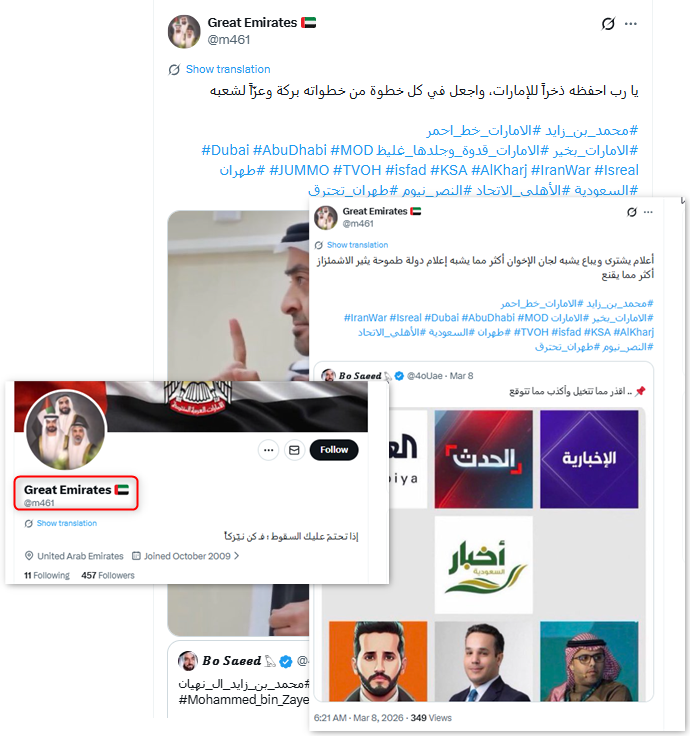
The account exhibits several characteristics of fake accounts: it is an impersonal account dedicated to political propaganda, does not use a real profile picture, and the username includes random letters and numbers, which may indicate the use of tools for automated posting.
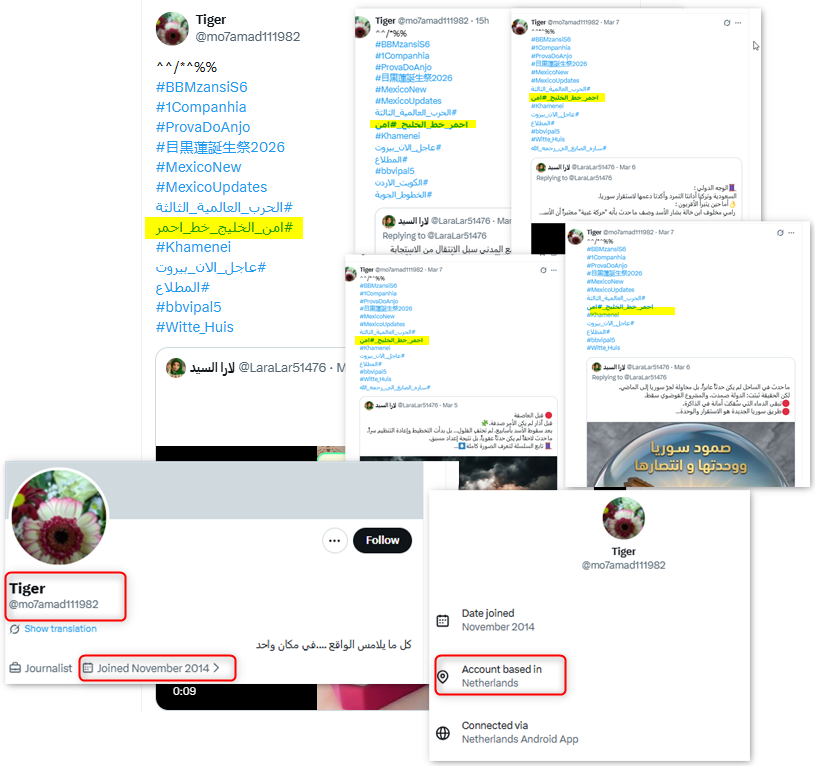
Next was an account named "Tiger @mo7amad111982," a Syrian account that published 47 tweets, all of which included the hashtag “Gulf security is a red line”. Although the account is not newly created, an examination of its posts revealed an automated posting pattern, as it repeatedly reposts tweets from another Syrian account with the frequent inclusion of a large number of hashtags. The transparency feature also showed that the account is active from the Netherlands. It fits the characteristics of fake accounts: it is not a personal account, is dedicated to political propaganda, specifically for the new Syrian regime, does not use a real profile picture, and the account's username contains random letters and numbers.
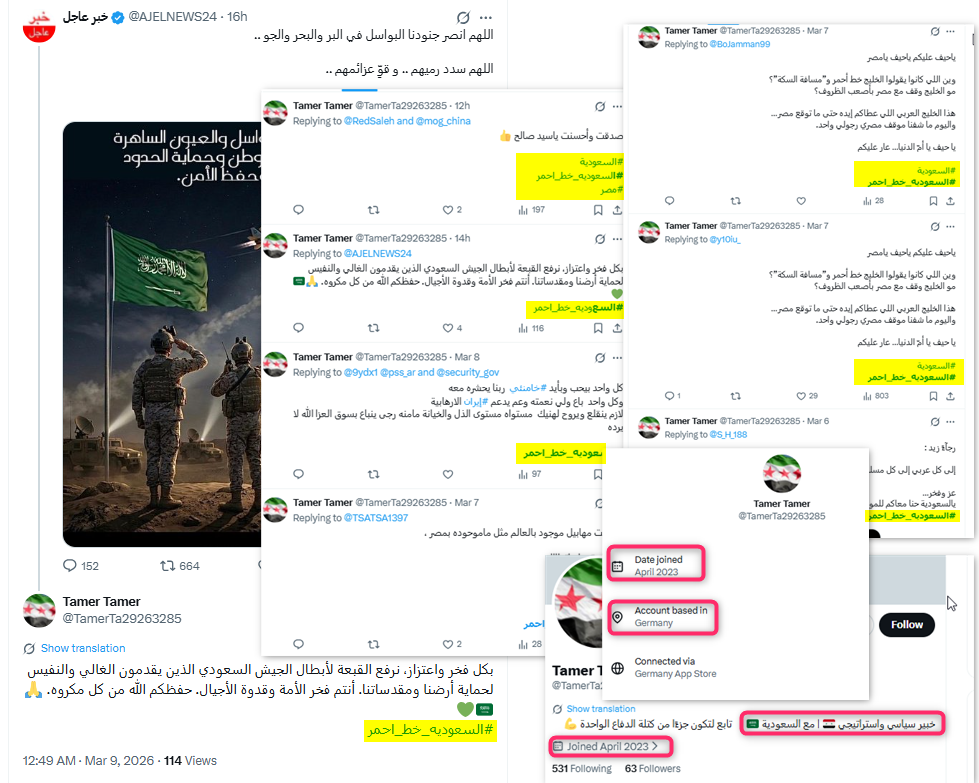
Also among the most interactive accounts is another Syrian account under the name "Tamer Tamer @TamerTa29263285," who identifies himself as a "political and strategic expert." He posted 43 posts, all of which included the hashtag “Saudi Arabia is a red line”, and these posts came in the form of comments, indicating that the account's activity primarily aimed at amplifying the hashtag's spread. Transparency features also showed that the account is active from Germany.
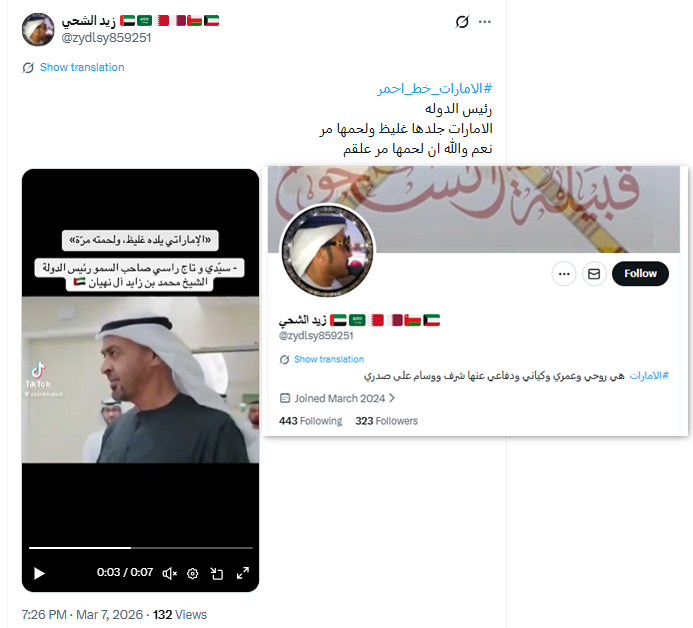
An account named "Zayed Al Shehhi @zydlsy859251" published about 34 tweets. This is a new Emirati account, created in 2024, and all its tweets included the hashtag #”UAE is a red line”. A content analysis of the account showed that it is not personal and is dedicated to political promotion.
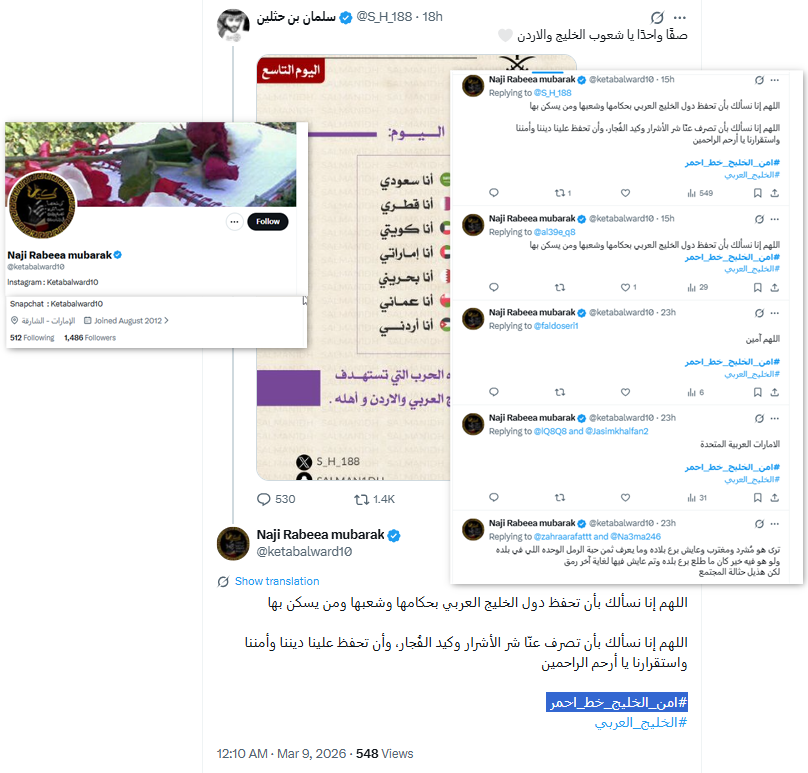
It was followed by an account named "Naji Rabeea Mubarak @ketabalward10" which published 32 posts, all including the hashtag “The Gulf is a red line”, and all were published in the form of comments, which indicates that the account, which appears to be new and non-personal, aimed to amplify the spread of the hashtags through comments.
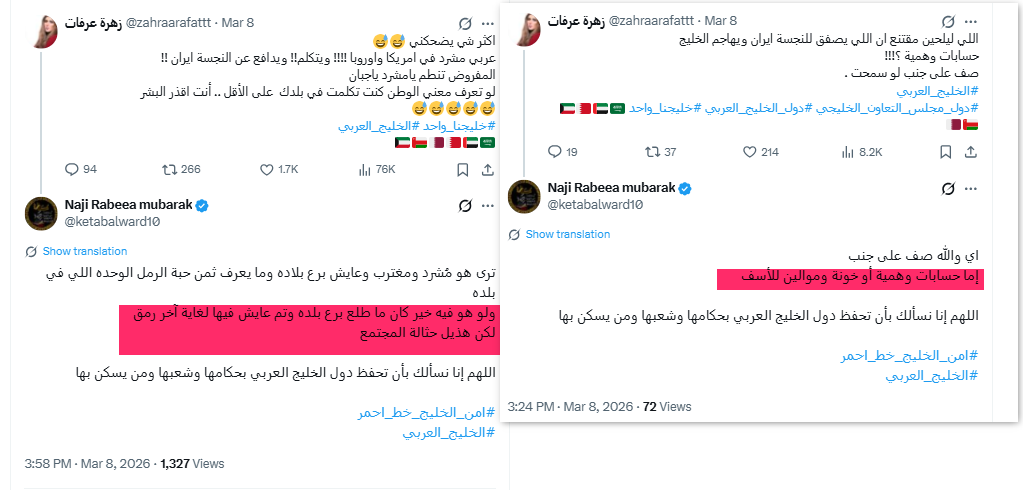
كما رُصد أن الحساب تبنى خطاب كراهية وتحريضاً ضد المغتربين والعاملين في دول الخليج ضمن تعليقاته، غير أن هذا الخطاب لم يكن حالة فردية، بل تكرر لدى عدد من الحسابات المشاركة في الحملة.
From a Campaign of Solidarity to Incitement
Amidst posts expressing solidarity and tweets glorifying political actions, another narrative has emerged, targeting expatriates and foreign workers in Gulf countries. This discourse has been characterized by a clear tone of hatred, calling for restrictions on the residency of foreigners or their expulsion, while some tweets described them as traitors or Iran sympathizers.
Saudi accounts posted tweets demanding restrictions on the residency of expatriates or their deportation. Soon, some posts evolved into calls to report anyone filming, accusing them of espionage or treason, and demanding their arrest and deportation on the grounds that they pose a threat to national security.
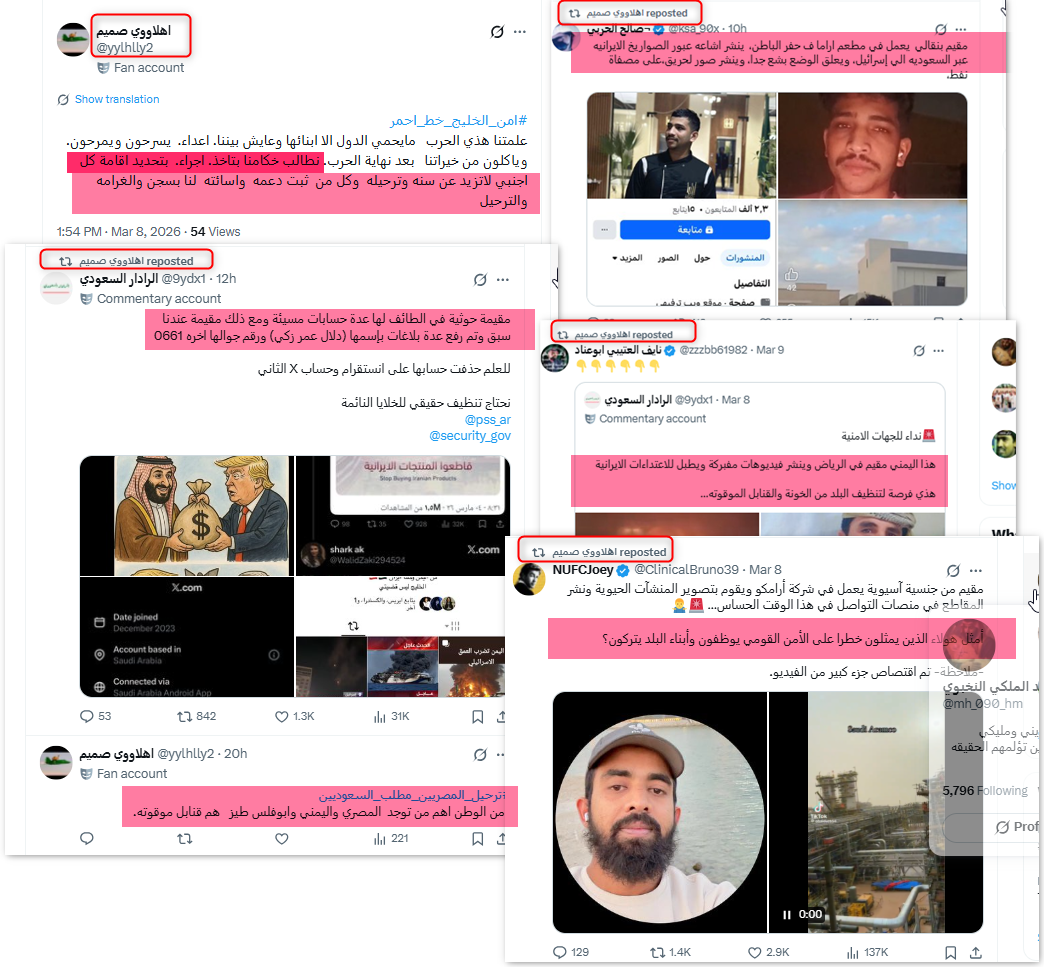
Other accounts also republished the demands for deportation, with some targeting specific nationalities such as Egyptians and Yemenis, while other accounts accused anyone publishing videos of treason.
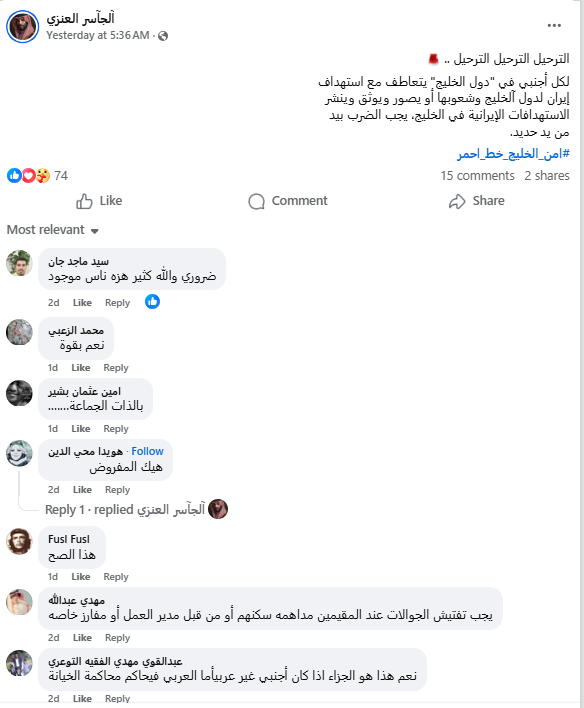
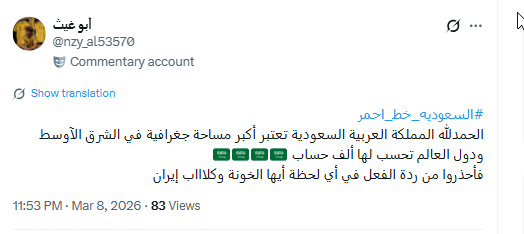
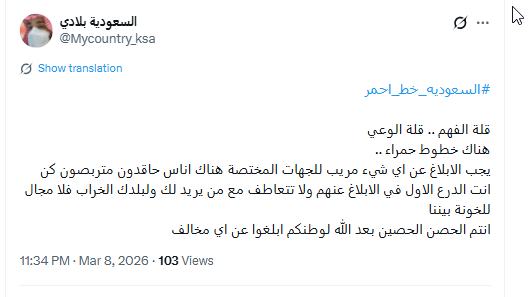
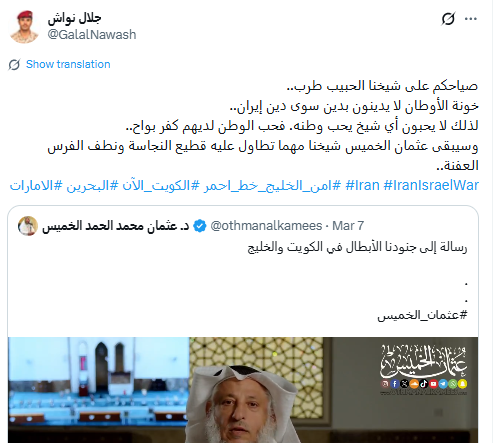
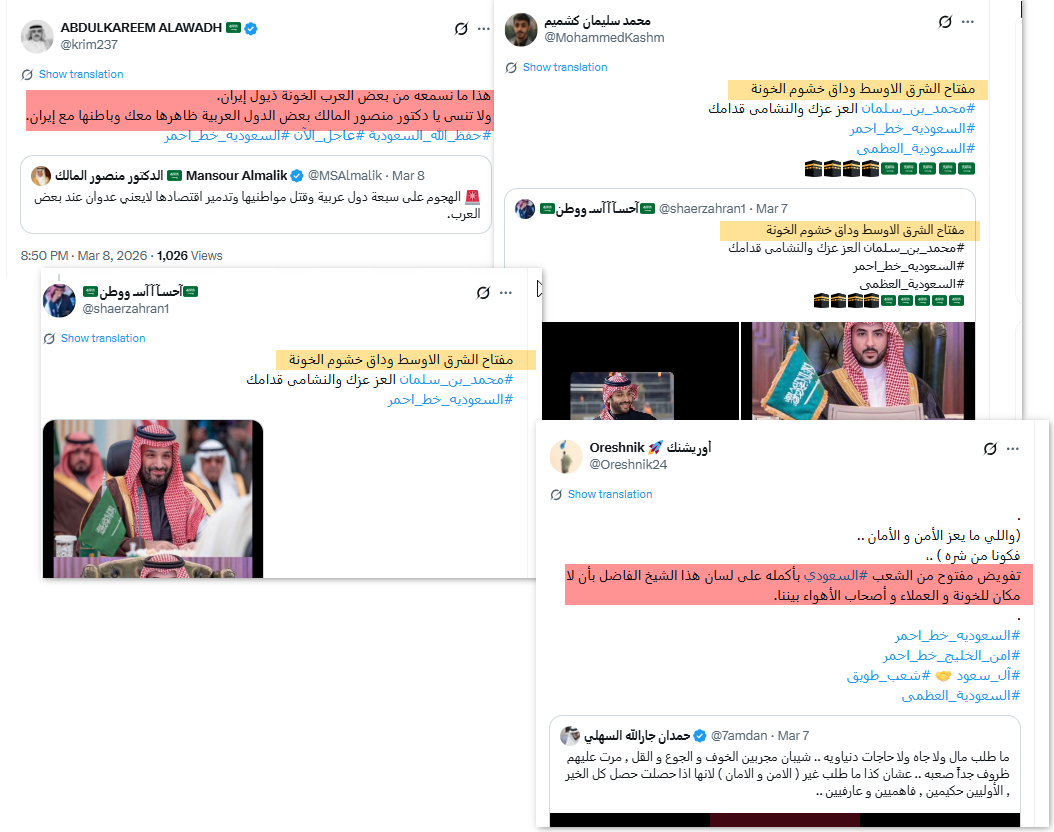
These calls were not limited to Saudi Arabia, as they also appeared in the rest of the Gulf countries. A recent and unverified Emirati account published a post calling for reporting anyone who posts videos from the UAE, and the account also interacted with offensive comments with users who commented on the missile attack.
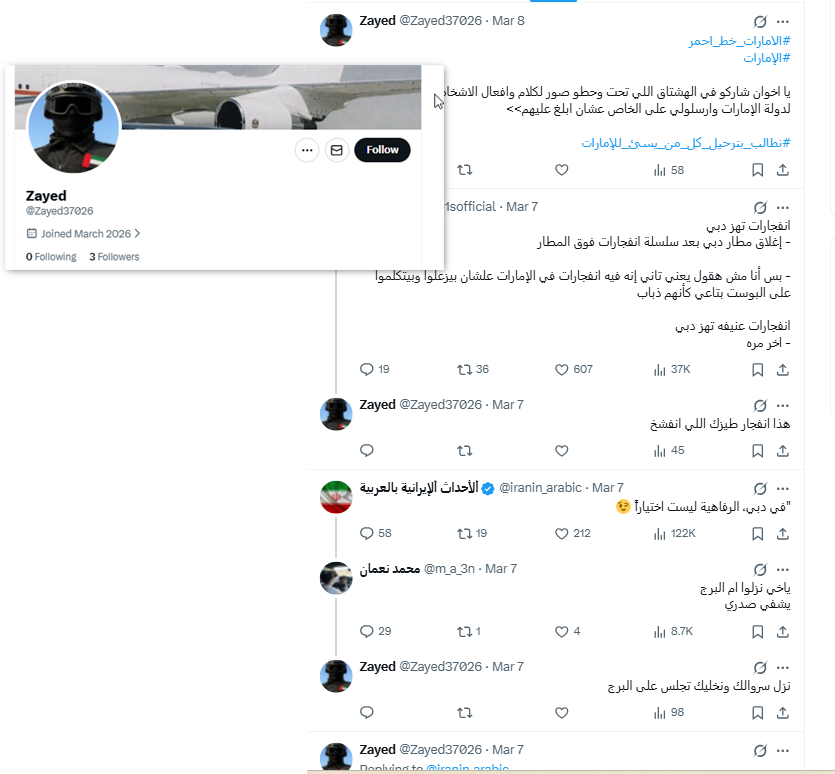
Kuwaiti accounts also repeated calls for reporting, with some using insulting descriptions against expatriates. The same rhetoric was repeated in tweets from Qatari accounts that described expatriates as traitors and spies.
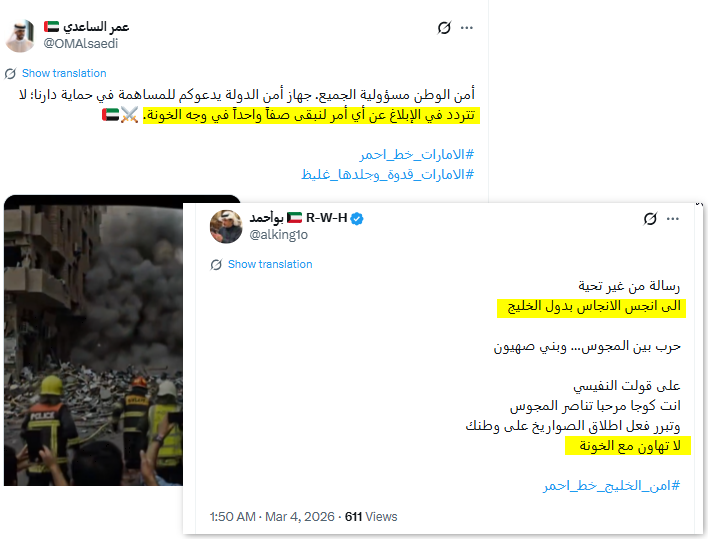
The same rhetoric was repeated in tweets from Qatari accounts that described expatriates as traitors and spies, as the solidarity campaign turned into a security campaign, adopting incitement and hate speech describing any opponent as traitors and demanding their deportation.
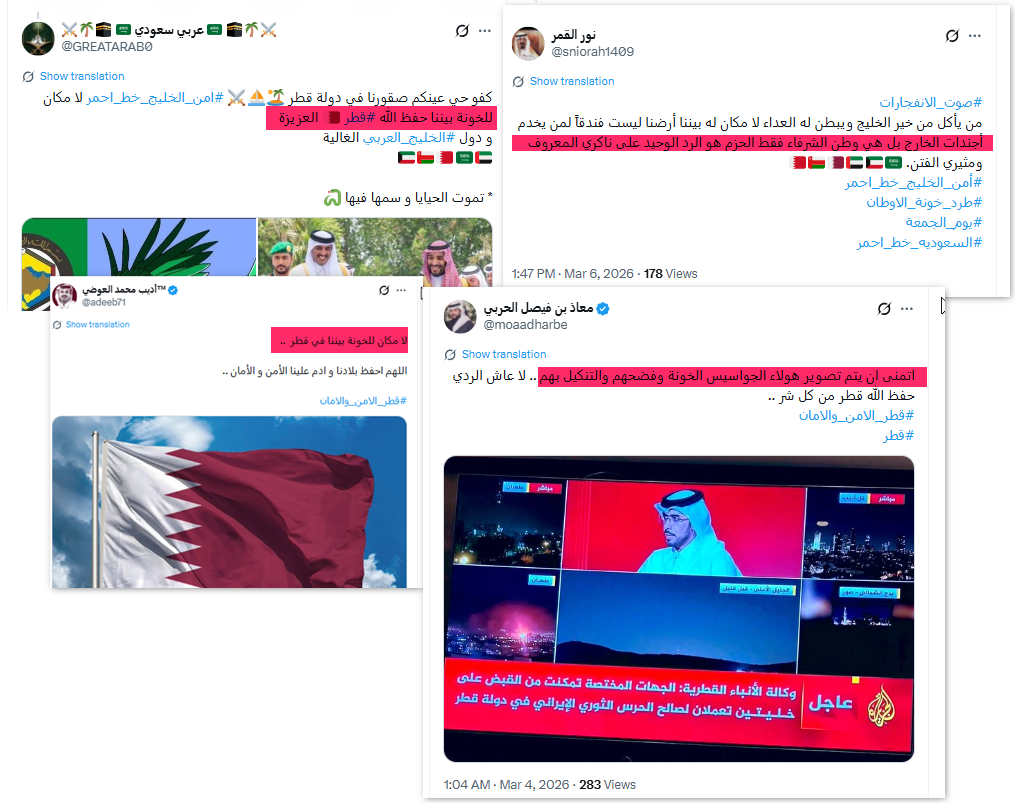
This is how the solidarity campaign gradually transformed into a digital campaign with a security dimension, which included hate speech calling for exclusion and demanding the deportation of expatriates.

Other Articles