Prepared by: Ibrahim Helal - Sherif Morad
Arabi Facts Hub
is a nonprofit organization dedicated to research mis/disinformation in the Arabic content on the Internet and provide innovative solutions to detect and identify it.
In times of crisis and war, events are shaped not only by facts on the ground, but also by the ways in which those facts are narrated, the headlines that are repeated, and the frames through which different media outlets interpret unfolding developments. This series of data-driven analytical reports emerged from that premise. It is the result of a collaboration between the Arab Fact-Checkers Hub (AFH) and Anmat, an independent research initiative, with the aim of examining Arabic-language media coverage of the Iran-related war and tracing how competing narratives were constructed across news outlets and digital platforms.
The series consists of six journalistic stories based on a dataset compiled and analyzed by the Anmat research team. The dataset draws on content published by five influential Arabic-language digital media outlets with significant reach and impact on public discourse: BBC Arabic, RT Arabic, Al Jazeera, Sky News Arabia, and Al Arabiya. The research covered all content published during the three days preceding the U.S.-Israeli strike and the first seven days following the outbreak of the war, spanning the period from February 28 to March 6. Data collection was conducted using open-source Python libraries.
The analysis employed Association Rule Mining (ARM) to examine headlines and article bodies across multiple levels. This included identifying the most frequently occurring terms, analyzing recurring linguistic patterns and measuring their prevalence, and extracting dominant narrative structures through statistical indicators that reveal the strength and prominence of each pattern. The methodology also accounted for differences in publication volume among the selected outlets. Findings were analyzed both collectively and at the individual outlet level, while also tracking shifts in coverage over time.
Building on these findings, the editorial team at the Arab Fact-Checkers Hub reviewed and interpreted the results through a journalistic lens. The resulting reports go beyond presenting numbers and statistics; they seek to understand what lies behind them. How did different media outlets frame the conflict? Which narratives gained the greatest prominence? And how were political positions reflected in language, framing, and headline construction?
These reports do not claim to offer definitive conclusions. Rather, they aim to provide a deeper reading of the media landscape during the first week of the war by combining data analysis with editorial insight. In doing so, they seek to shed light on how news is produced and how its meaning is reshaped in moments of conflict.
In this report...
We focus on a specific question: How was Iran represented in headlines and news coverage? Was it portrayed as an active actor shaping events, or primarily as a territory subjected to attacks and conflicts unfolding on its soil?
The findings reveal that Iran featured prominently across the coverage. Yet its name often appeared within contexts dominated by terms such as “war,” “Trump,” or “Israel,” or through linguistic constructions that kept military action at the center of attention while obscuring its direct perpetrator. In several Gulf-based media outlets in particular, editorial patterns emerged that emphasized the outcomes of attacks and air-defense operations while reducing explicit attribution to Iran as the attacking party. As a result, Iran remained highly visible by name, yet comparatively absent as an active agent in the narrative.
Before the American-Israeli attack on Iran on February 28, 2026, US forces mobilized hundreds of military cargo planes, refueling aircraft, and fighter jets at their bases in the Middle East, coinciding with US-Iranian negotiations in the Sultanate of Oman. Despite all this, Arab newsrooms, particularly in the Gulf, showed little interest in these military build-ups, as the matter seemed routine.

On the morning of February 28, when American-Israeli raids on Iran began, followed by an Iranian response shelling military bases in Gulf countries, Arab newsrooms awoke to a sudden earthquake for which they were unprepared. Consequently, each platform's coverage of the war varied, and their editorial priorities differed, producing distinct narratives. However, most implicitly agreed on a single editorial line: obscuring Iran as an attacking actor and limiting its presence to that of the party receiving the blows.
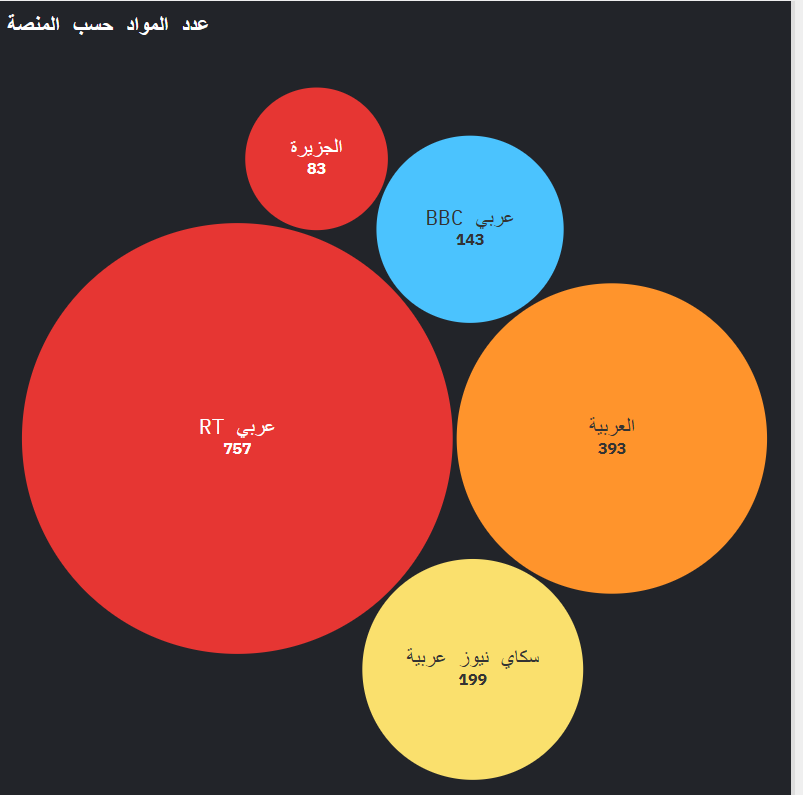
This report relies on an analysis of 1,575 articles published by five major Arab news platforms over ten consecutive days, from February 25 to March 6, 2026, within the "Anmat" project database, which monitors recurring linguistic patterns in headlines and texts. These outputs are not used as a final judgment, but as a map to help track narratives within the original news and compare them across different platforms and time periods, as the data shows the structure of repetition rather than providing a ready-made interpretation.
The total word count of the articles was approximately 2.1 million words, making the data a dense sample illustrating the editorial variations between the platforms.
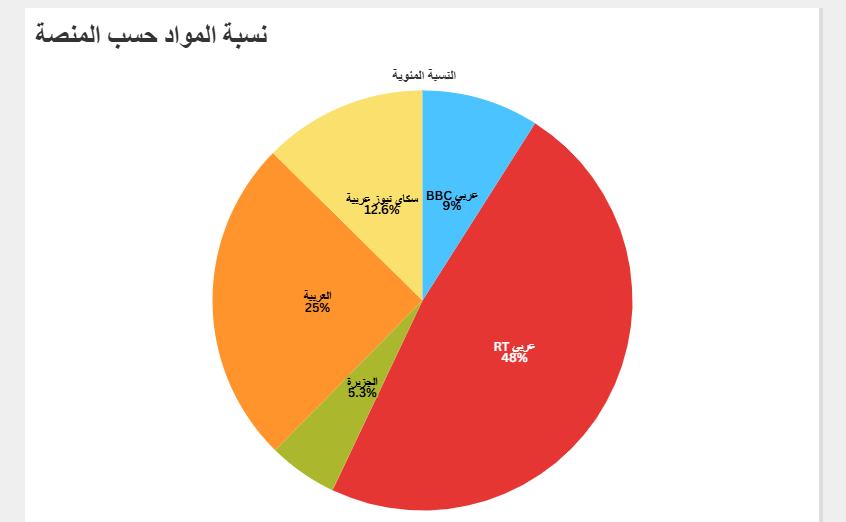
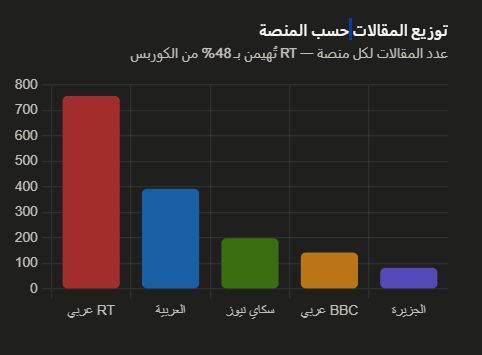
Initial data analysis showed that RT Arabic accounted for about half of the published material, at 48% of the total articles (757 articles), followed by Al Arabiya at 25% (393 articles), then Sky News Arabia at 12.6%, BBC Arabic at 9.1%, and Al Jazeera at 5.3%. This indicates that the most prolific platform in the first week of the war, who seemed fully prepared for the event, was the Russian platform, not the Gulf platforms.
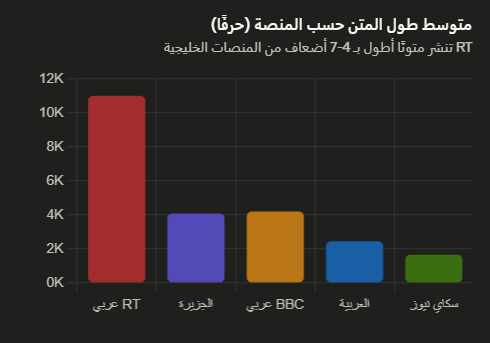
More significant than the number of articles was the average length of the bodies of material published by each platform. The analysis showed that RT’s bodies were the longest among all platforms; the average body length was 11,012 characters, compared to only 2,454 characters in Al Arabiya’s bodies and 1,663 characters in the average body of Sky News Arabia. In other words, RT published bodies four to seven times longer than the Gulf platforms, which gave it a larger presence in the data.
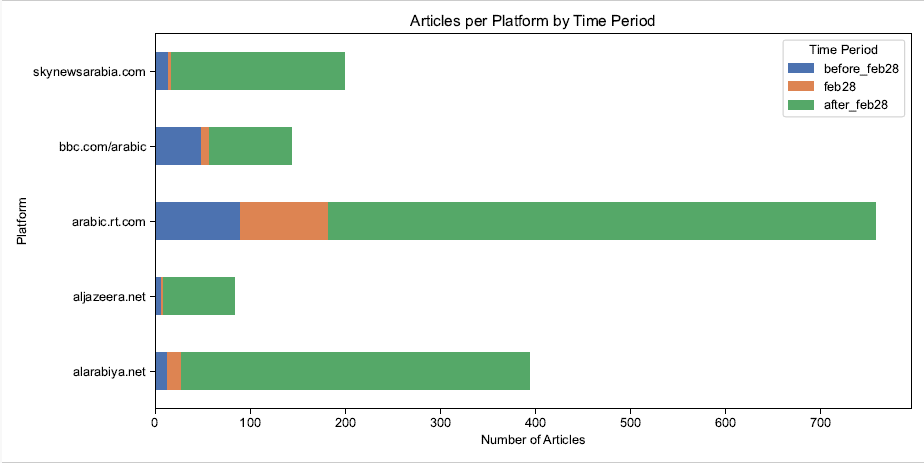
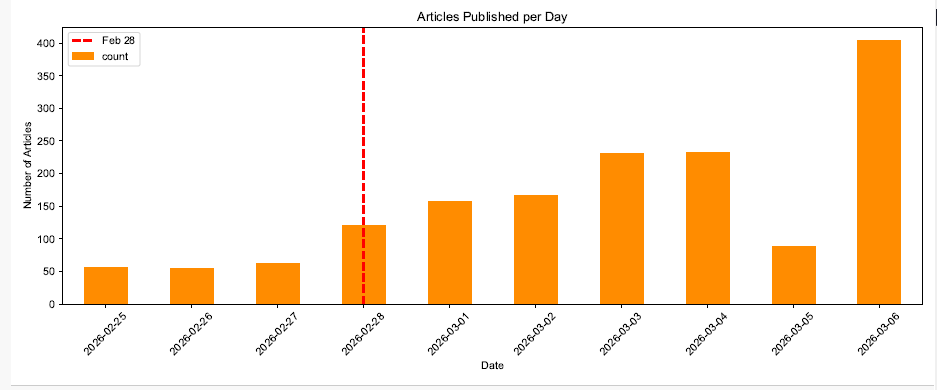
The data is divided into three semantic periods: before February 28 (172 articles, or 11%), February 28 (121 articles, 7.7%), and after February 28 (1,282 articles, or 81%). The daily publication rate jumped from 57 articles per day before the event to 183 articles after it, meaning most of the data consists of texts published by the platforms as a reaction, not as proactive coverage.
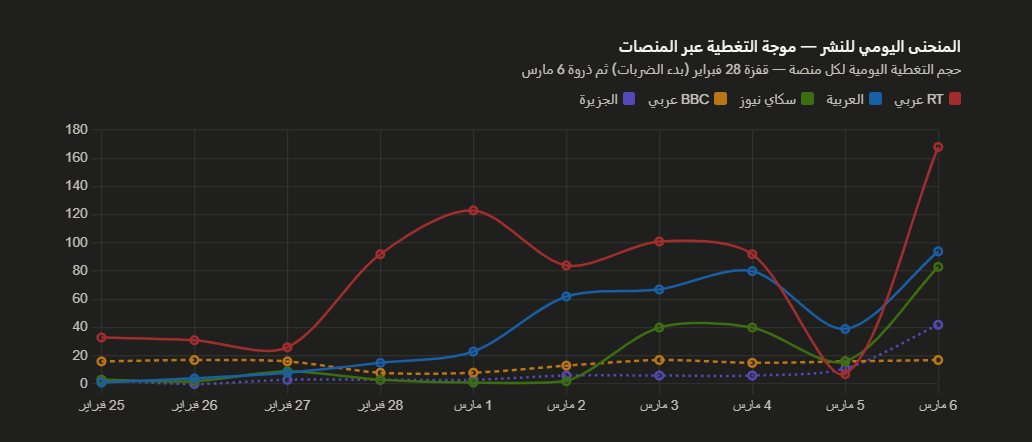
The daily curve shows two notable peaks: the first on February 28 with the start of the strikes, when RT jumped to 92 articles in one day; the second on March 6, when coverage peaked at 404 articles. This analysis shows that while RT Arabic seemed fully prepared for the event, BBC Arabic maintained a nearly constant publication rate (15-17 articles per day) regardless of the pace of events, while Al Jazeera appeared to be a slow platform that took about a week to reach its coverage peak.
Iran: Extraordinary Presence Without Being Named
Iran was present in the headlines with a weight estimated at 31.5, a figure that represents its appearance in a mathematical formula dividing the number of times it appeared by the number of words in the headline. The number does not reflect the percentage of the word’s presence in the headlines, but measures the density of its presence. It is a figure higher than the weight of the word "war," which was 8.3, by more than four times, meaning the word "Iran" recorded the highest presence in all headlines.
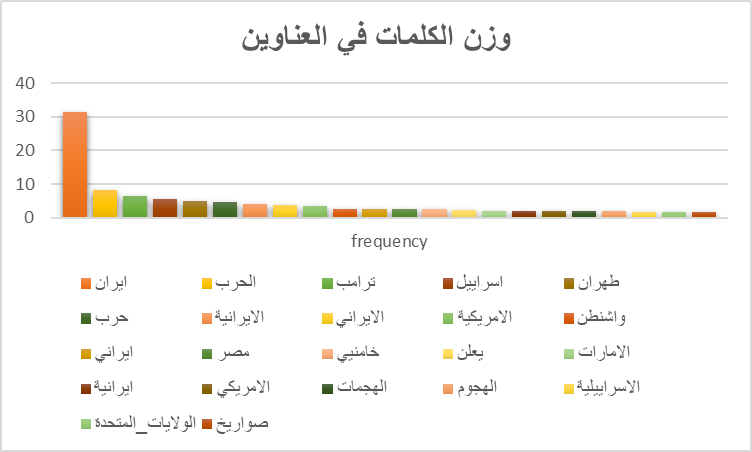
This becomes clearer when this presence is compared with the weights of other words, such as "attacks" and "attack," which appeared with weights of 1.85 and 1.82, but without direct attribution to Iran. The words "Trump" and "Israel" also appeared with weights of 6.32 and 5.41, respectively, while the word "interception" appeared with a weight of only 0.58, a very low figure despite the frequency of interception events.
However, this dense presence of Iran in the headlines did not point to any agency (effectiveness/action) on its part; rather, it was present as an object receiving the American-Israeli blows and missiles. When press materials speak about bombing that occurred in Gulf countries, the act is attributed to an unknown entity.
To prove this hypothesis, three groups of words related to the act of "attack" were adopted to indicate agency:
First Group: The Offensive Actor, including words such as: attacks, launches, targets, hits, shells, threatens, announces targeting. These indicate Iran’s initiation of the action.
Second Group: The Object, including words such as: on_Iran, against_Iran, war_on, hitting_Iran, shelling_Iran, the_strikes. These indicate that the action happened to Iran.
Third Group: The Unnamed Actor, including words such as: towards, hostile, unknown, source, reports, believed, was_launched. These indicate deliberate obfuscation in the journalistic text, whether in the headline or the body.
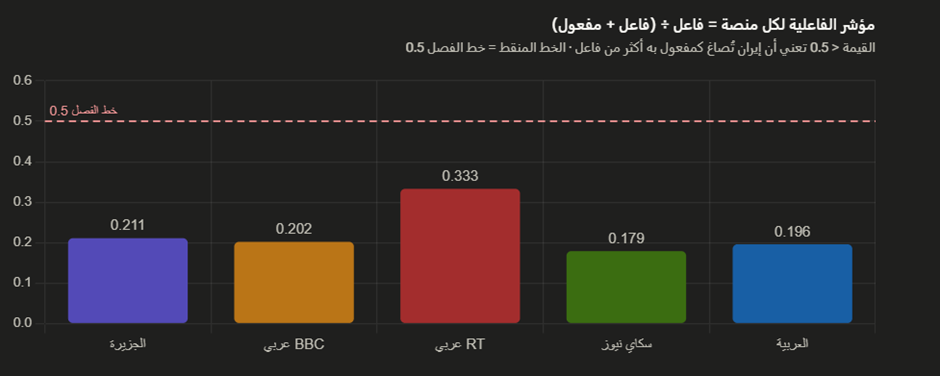
After that, the agency ratio for each group was measured by dividing the sum of the agent group weights by (the sum of the agent and object weights together). If the ratio exceeded 0.5, it indicated the superiority of the agent's presence, and vice versa.
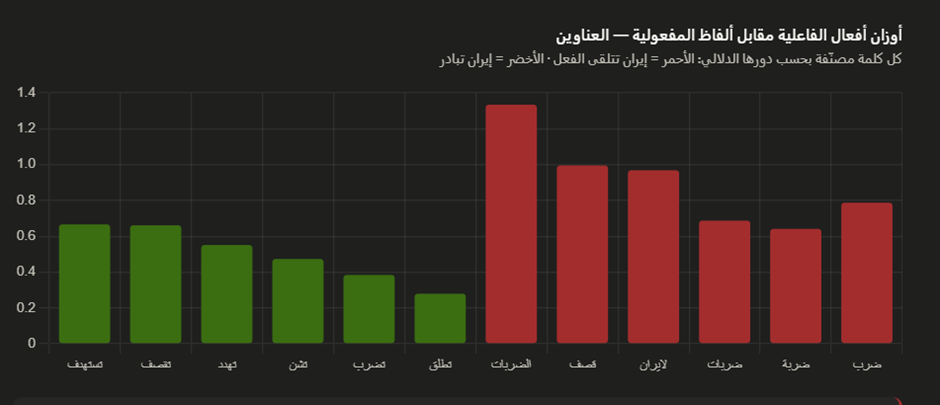
The analysis showed that the weights of the agency words in the headlines were as follows:
Targets: 0.666
Shells: 0.661
Threatens: 0.551
Launches: 0.473
Hits: 0.384
Fires/Launches: 0.279
While the weights of the object words in the headlines—meaning Iran receiving the action—were as follows:
The strikes: 1.334
Shelling: 0.995
For Iran: 0.968
Strikes: 0.687
A strike: 0.787
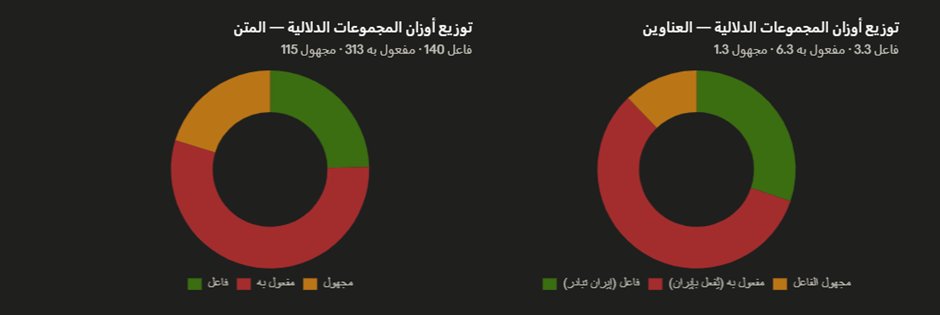
This makes the agency ratio in the headlines 0.34, which is less than 0.5, clearly indicating that the weight of the agency words is less than the weight of the object words. The situation was no different in the bodies of the articles, where the agency ratio reached 0.31, i.e., lower than in the headlines, meaning the platforms presented Iran as an object in their total coverage.

But the matter is not limited to presenting Iran as an object. In reality, Iran was being subjected to intense daily air strikes, but the analysis of the agency ratio for each platform individually reveals the limits of each platform's coverage and uncovers another phenomenon: deliberate obfuscation.
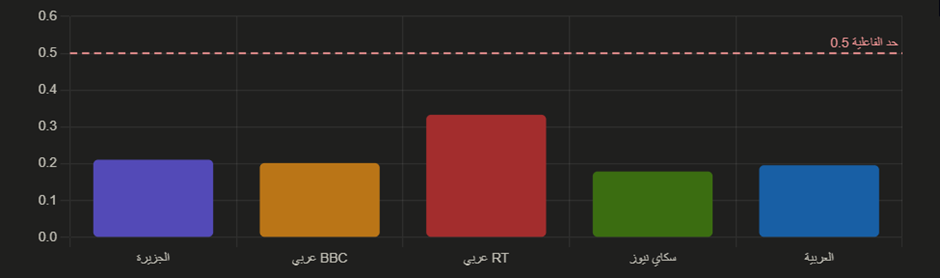
Despite the five platforms’ tendency to present Iran as an object, the agency ratios varied between them according to each platform's narrative. RT Arabic recorded the highest agency ratio at 0.333, a ratio that relatively corresponds to the reality of the mutual bombing in the war.
In Al Jazeera and BBC Arabic, the agency ratio reached 0.211 and 0.202, respectively. Although they are relatively lower than RT Arabic and all three are below the agency threshold of 0.5, they remained within limits closer to reality as they included words indicating Iran's agency.
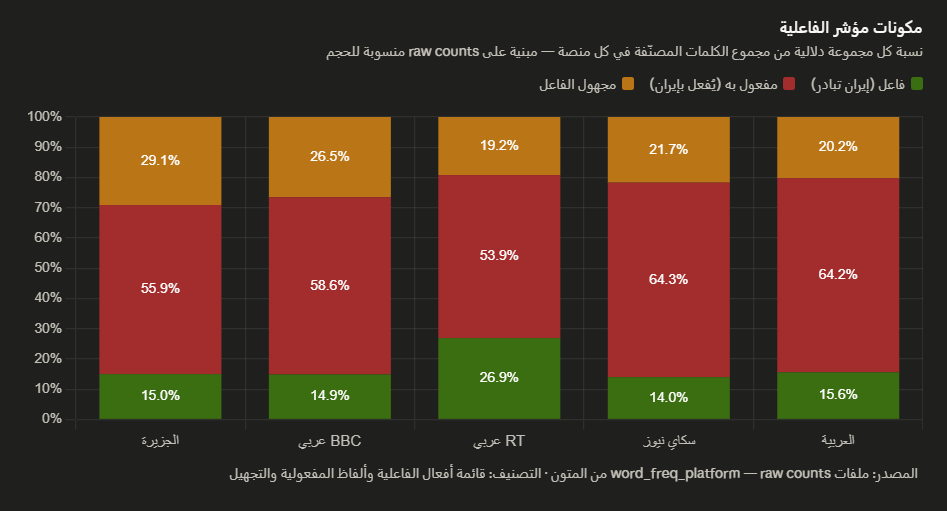
As for Al Arabiya and Sky News Arabia, the agency ratio dropped even further, reaching 0.196 and 0.179, respectively, the two lowest ratios among the five platforms, revea;ing the absence of words indicating Iran's agency.
The analysis also revealed a new component: "Obfuscation." Al Jazeera was the most frequent user of obfuscation words, at a rate of 29.1% of the total words in its articles. It was followed by BBC Arabic with 26.5% of its articles not indicating an agent, then RT Arabic, Sky News Arabia, and Al Arabiya with similar percentages.
Conversely, Sky News Arabia led the percentage of words indicating Iran as an object at 64.3%, followed by Al Arabiya at 64.2%, which are the lowest on the agency index.
Obfuscation in the Headline and Absence in the Body
To assess the levels of agency in the news coverage more precisely, we compared how often specific terms appeared in headlines versus the article bodies. The primary objective was to determine if a word's prominence in headlines aligned with its frequency within the main text, rather than simply counting its total occurrences.
To conduct this comparison, we used a mathematical formula measuring the concentration ratio of the word in headlines versus bodies:
Concentration ratio = (Word weight in body / Total body) ÷ (Word weight in headlines / Total headlines)
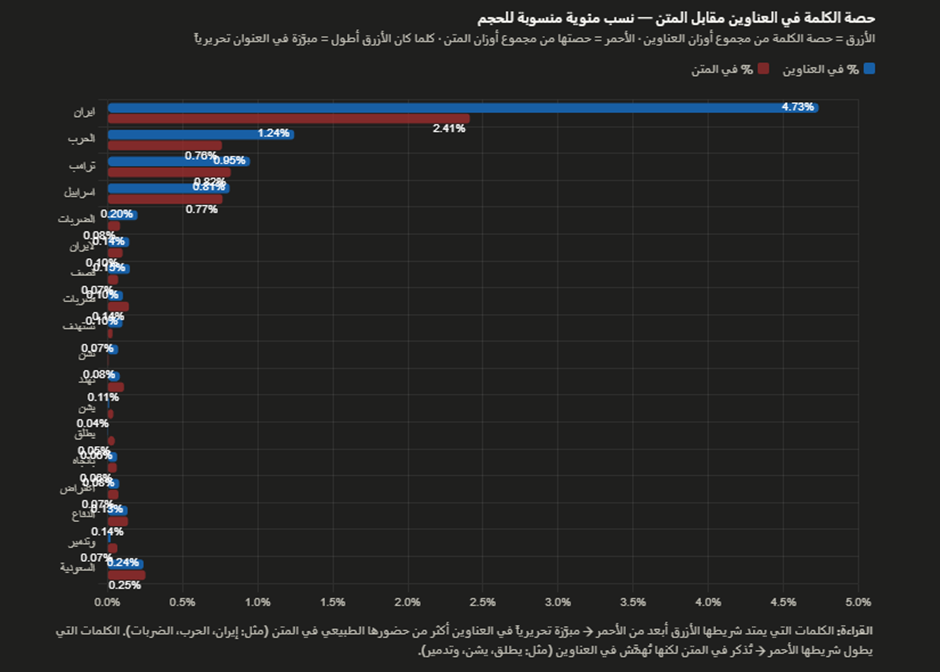
Findings from the analysis indicate that terms such as Iran, strikes, and launches were featured in headlines at rates significantly higher than their occurrence within the main text. Specifically, "Iran" accounted for 4.73% of the emphasis in headlines, yet only 2.41% within the article bodies. This suggests that editors prioritized the term by doubling its typical presence at the forefront, while simultaneously stripping it of any active agency.
As for the words "strikes" and "shelling," they were among the most prominent words in the headlines compared to the bodies, and were used to indicate a military event without clarifying the agent, whether it was Iran or Israel.
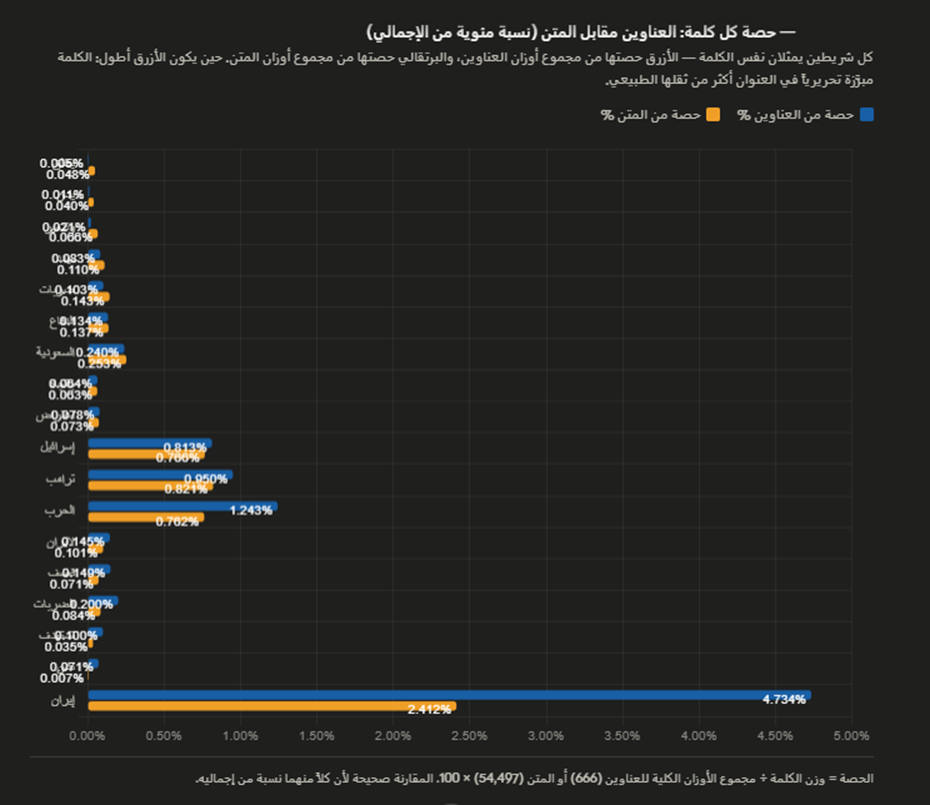
When the words "launches" and "targets" were present in both headlines and bodies, they were associated with Israel, not Iran, such as: "Israel launches an attack on Iran" and "Israeli raid targets the vicinity of the Iranian embassy." That is, the two verbs were attributed to Israel as the agent and Iran as the object.
Although the term "launches" was featured in 88 headlines, it was seldom linked to Iran as the active subject. The verb was predominantly used in reference to Israel, for example: "Israel launches a new wave of strikes on Tehran". In instances where Iran was the initiator, editors typically opted for passive phrasing like "Iranian attacks" to avoid the direct construction "Iran launches".
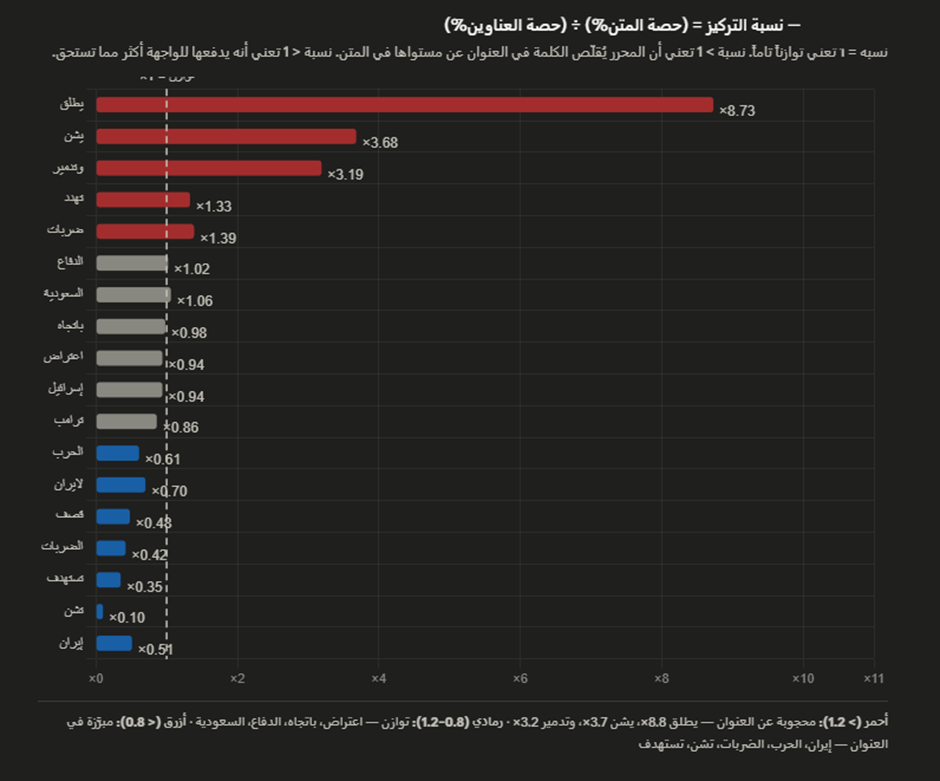
The word "fires” appeared in the bodies and was relatively absent from the headlines. It appeared in only 15 headlines with a weight of 0.036, while it accumulated in the bodies with a weight of 26.1. Since the verb is explicit in attributing the act to the agent, such as: "Iran fires missiles," this discrepancy is an indicator of the erasure of agency in the headlines.
Furthermore, headlines that included "fires" avoided explicit attribution, such as: "Saudi Arabia.. interception of missiles fired towards an airbase," where the verb came in the passive voice, without mentioning who fired the missiles, whereas Iran was mentioned in the body.
As for the word "destruction," which appears with a concentration ratio of 3.19 in favor of the bodies, it clearly demonstrates the policy of obfuscation, as it appears in the bodies within a direct context, such as: "Saudi Defense: Interception and destruction of a cruise missile east of Al-Kharj governorate." But its use in the headlines was sparse, because mentioning "destruction" logically requires mentioning what was destroyed, which is an Iranian missile, something some Gulf headlines avoid.
The analysis also showed a group of words that appeared in a balanced manner between headlines and bodies, such as: interception, towards, defense, Saudi Arabia. This means the editor did not evade mentioning "interception," "defense," and "Saudi Arabia," but evaded linking them to "Iran as an agent" and what it fired in the same headline.
In this example: "Saudi Arabia.. interception of missiles fired towards an airbase," all the balanced words appeared (Saudi Arabia, interception, towards), but "fires/fired" came in the passive voice, and whoever fired it—i.e., Iran—was absent.
This reveals that the formulation of the headlines highlighted Iran but hid its actions, highlighted military events like strikes and shelling but hid the agent, and highlighted the success of Gulf defense like interception and Saudi Arabia but hid what triggered the interception. So that, in the end, Iran becomes an unnamed agent.
Extensive Presence But Through Others: How Did Iran Enter Arabic Headlines?
The issue within Arabic news reporting lay not in an absence of Iran's name from headlines, but rather in the specific manner of its portrayal. Analysis of the data reveals that while Iran was a central term in the reporting, it rarely appeared as the initiator of actions. Instead, it was typically framed within the larger narrative of the conflict or through the lenses of foreign powers, particularly Israel and the United States.
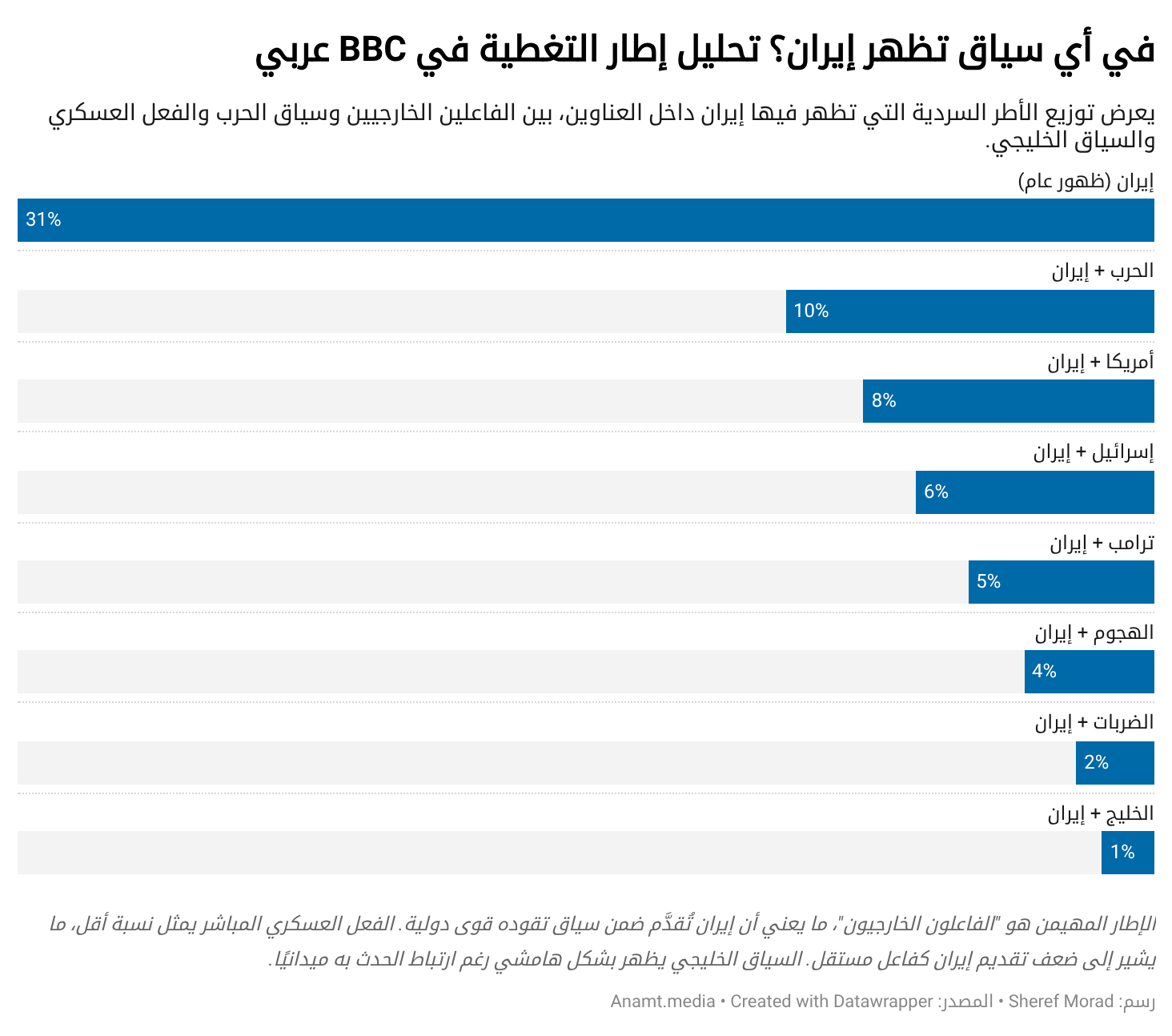
With an appearance in roughly 39.7% of all headlines, the term "Iran" maintained a high-frequency presence that highlights its central position within the news cycle. However, this statistical dominance did not necessarily translate into the country’s portrayal as the primary driver of events.
The narrative shifts when examining the contextual nature of these occurrences rather than mere statistical frequency. The term "Iran" was associated with "war" in 5.4% of headlines—nearly identical to its association with "Trump"—while its link to "Israel" appeared in roughly 3% of headlines.
While "Iran" featured in approximately 39.7% of all headlines—a high frequency that underscores its prominence—this numerical dominance did not equate to an editorial depiction of the state as a primary actor. Analyzing the thematic context reveals a significant shift: the term was connected to "war" in 5.4% of headlines (matching its association with "Trump") and to "Israel" in about 3%. These findings demonstrate that Iran was often framed as a secondary element within a narrative controlled by external forces rather than as an independent driver of events.
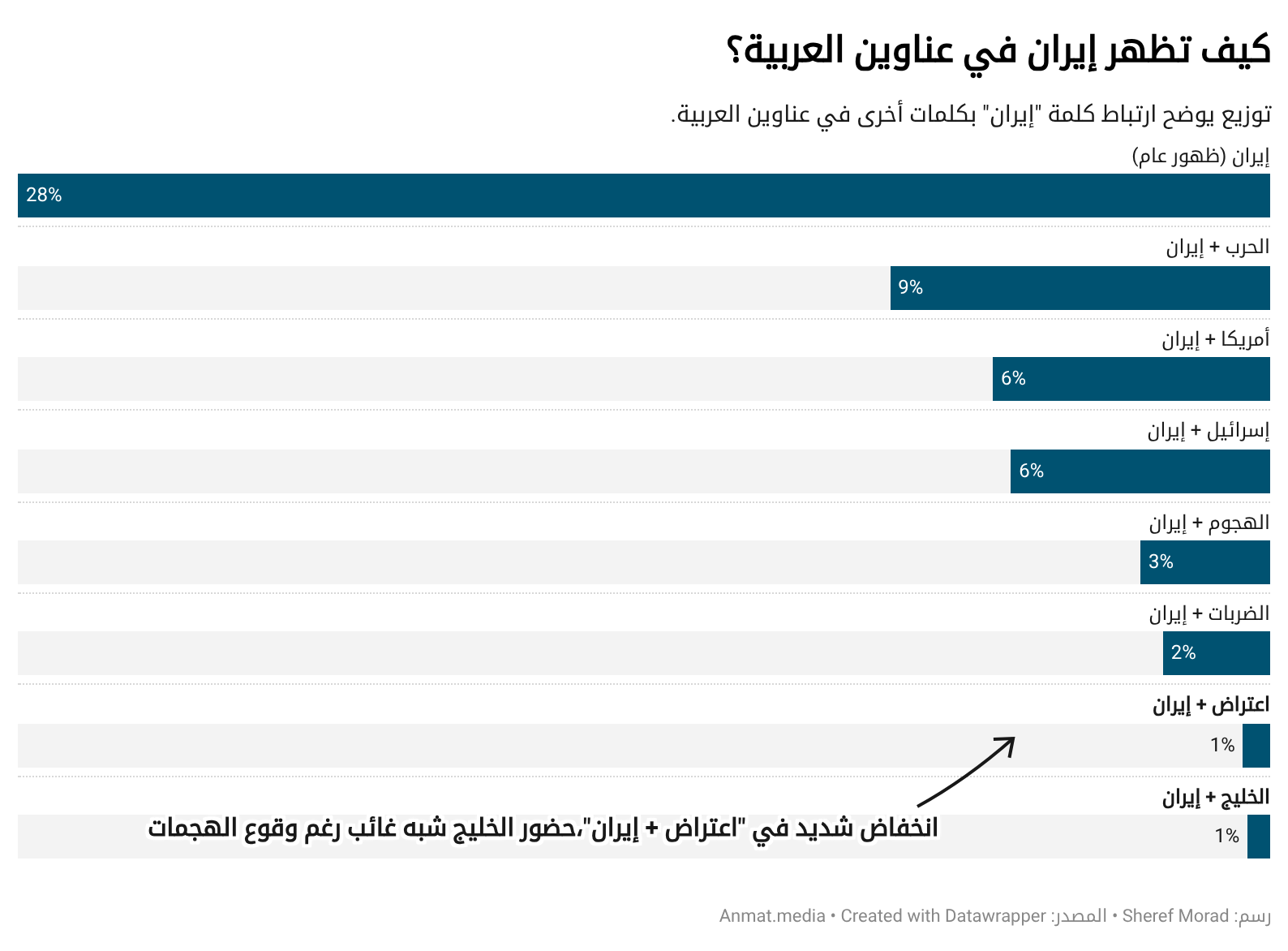
These statistics suggest that Iran was largely depicted through linguistic frameworks that relegated it to a role within an externally controlled environment. This narrative featured a conflict unfolding in its periphery, the active involvement of a U.S. president, and Israel as a central combatant. In other words, Iran did not always appear in the headlines as an independent power shaping the event from its position, but often appeared as a node within a broader narrative led by other players.
This meaning becomes clearer when we look at the direct Gulf contexts. The coupling of "Iran" with the word "Gulf" appeared in only 0.78% of the headlines, even though the war after February 28 did not remain confined within Iranian geography, but its effects extended to military bases and the security space in the region.
As for the term "interception," which is naturally linked to the discourse on reciprocal strikes and aerial defenses, its appearance was limited to a mere 0.58%. Furthermore, no consistent association emerged between this word and "Iran" frequently enough to constitute a significant trend in news headlines.
This data illustrates that while Arabic headlines did not omit Iran, they restructured its role through a specific linguistic lens. Iran is frequently cited, yet it is predominantly paired with "war," "Trump," and "Israel" rather than being identified as a primary actor to whom actions are explicitly and repeatedly attributed. This distinction is crucial; the investigative focus shifts from whether Iran was featured in the reporting to the nature of its portrayal: was it depicted as a force driving the events, or merely as a recurring name within a narrative defined by other players?
Agent Absent in Action
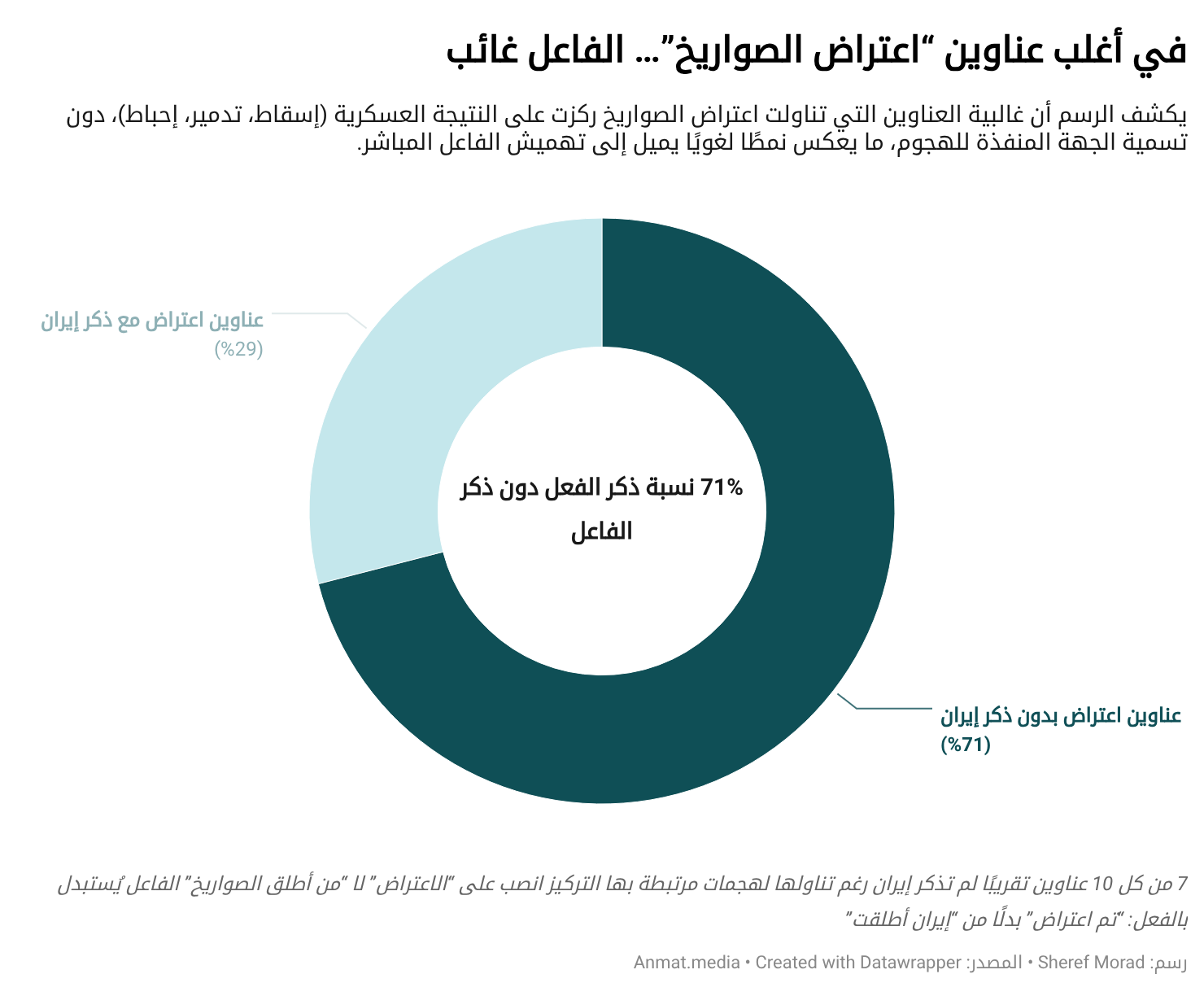
In news coverage, there are moments that do not tolerate ambiguity: the moment of the strike, the moment of interception, and the moment of missile firing.
These are the points where the agent is supposed to appear clearly: Who fired? Who struck? Who started it?
But when tracking the headlines related to these moments, a different pattern appears. While vocabulary such as "attack," "strikes," and "escalation" recur, there is no clear linking of these actions directly to Iran as the agent.
For example, the coupling of "Iran" with "attack" remains limited (only about 1.6%), a low figure compared to the presence of the word "Iran" itself in the headlines.
More importantly, vocabulary such as "interception" — a technical term indicating a direct defensive reaction — is not clearly linked to Iran in the headline. Here, a linguistic gap with editorial significance appears: The action is present, but the agent is not present with the same clarity.
Instead, headlines tend to use more neutral or generalized formulas for the action, such as: interception of missiles, rising tension, exchange of strikes, military escalation.
These formulas do not hide the event, but they linguistically redistribute it so that the action becomes independent, partially separated from its direct agent.
Rather than concealing the event, these linguistic frameworks redistribute the narrative, allowing the action to appear autonomous and somewhat detached from its primary agent.
Observations within this framework suggest that certain outlets prioritized constructing headlines around the resulting state or outcome—such as clashes, escalation, or tension—instead of focusing on the initiation of the act itself.
This editorial approach does not suggest the actor is absent from reporting altogether. Instead, it highlights a disconnect where the actor's visibility is detached from the specific instances of action.
The agent is not entirely missing from the coverage; rather, its presence fails to align with the actual moments of the event.
Essentially, Iran may be clearly identified in broader contexts, but that same transparency is often missing when it comes to the immediate reporting of military operations. Consequently, while Iran may be explicitly identified in analytical or political discussions, that same clarity is often lacking during the immediate attribution of military operations.
This does not mean the agent is completely absent from the coverage, but it means its appearance is not consistent with the moments of the action itself.
In other words, Iran may be mentioned clearly in a political or analytical context, but it is not always mentioned with the same clarity at the moment of direct attribution of the military action.
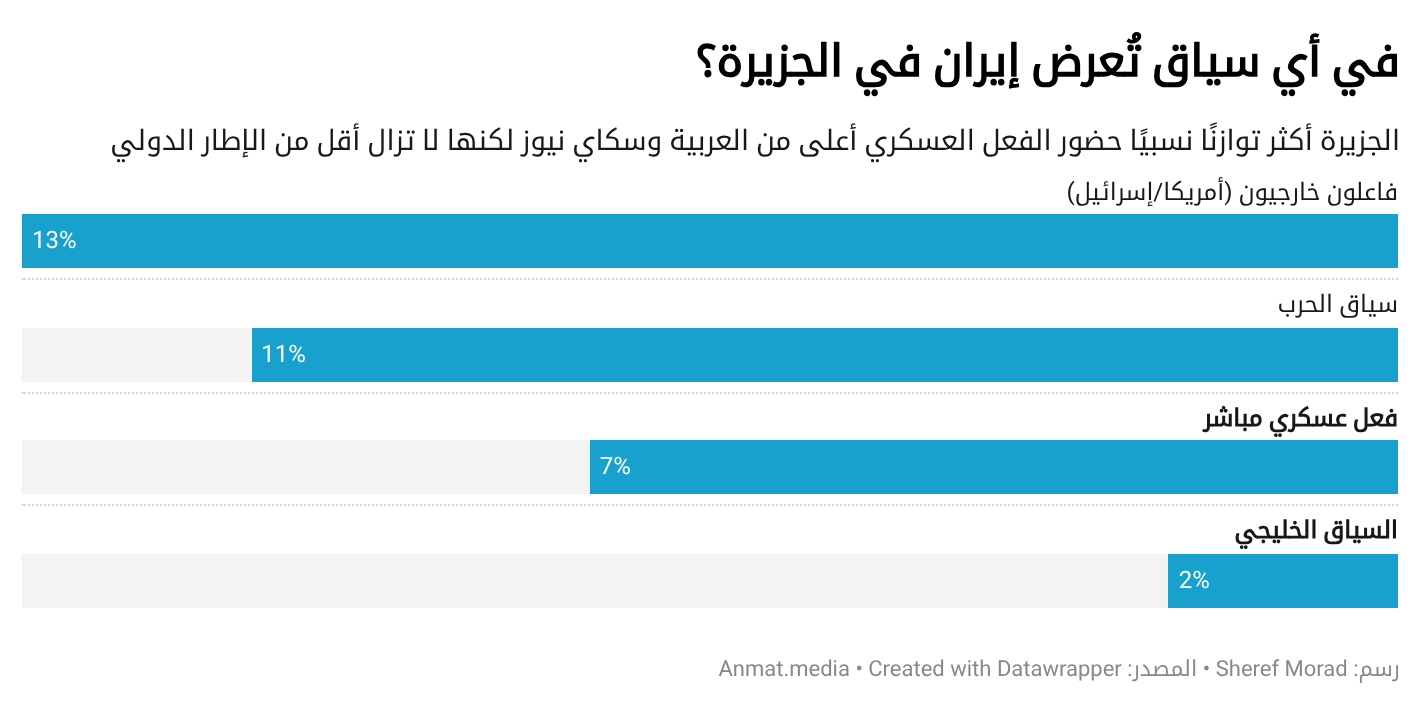
This analysis demonstrates that Iran is not absent from Arabic headlines; instead, its visibility is filtered through narratives centered on the conflict and external players. Many headlines maintain the focus on military actions while depriving the primary actor of editorial clarity. Consequently, the critical editorial inquiry shifts from whether Iran was mentioned to a deeper investigation: When is Iran portrayed as an active agent, and when is it relegated to a static entity within a narrative orchestrated by others?
Prepared by: Ibrahim Helal - Sherif Morad