Arabi Facts Hub
is a nonprofit organization dedicated to research mis/disinformation in the Arabic content on the Internet and provide innovative solutions to detect and identify it.
Yemeni and UAE-backed accounts launch a digital campaign against the Sultanate of Oman
Jun. 09, 2026 | AFH
During mid-March, as US-Israeli strikes on Iran intensified and the regional airspace teemed with Iranian drones and missiles, the confrontation spilled into the digital realm. Gulf-based accounts initiated a social media offensive against the Sultanate of Oman, persisting through the hostilities and their aftermath. These accounts alleged that Oman had "betrayed the Arab cause" by aligning itself with Iran.
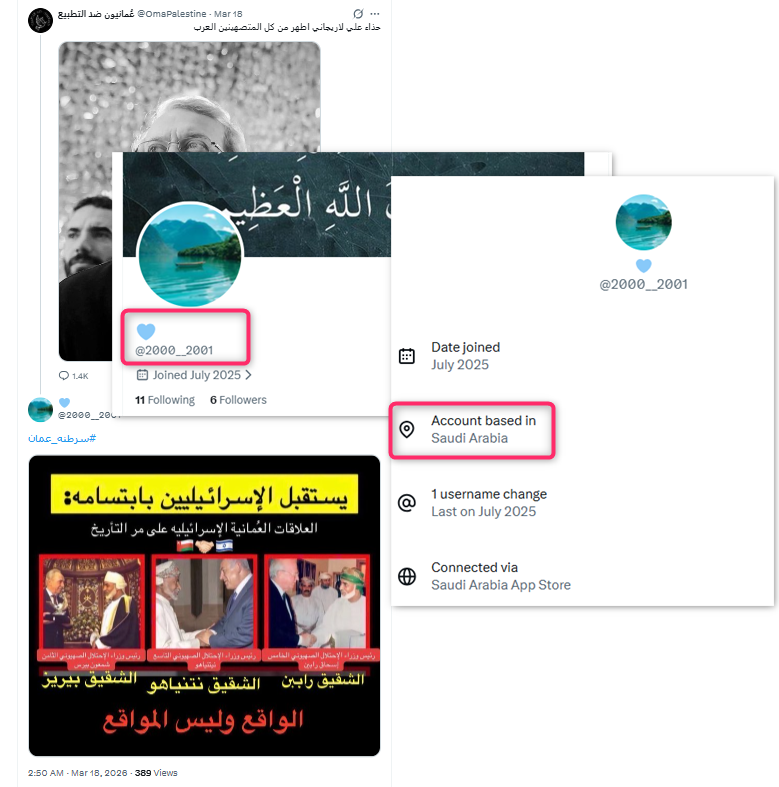
The campaign against the Sultanate of Oman began on March 18, when an anonymous account commented on a post by "Omanis Against Normalization." The comment featured the hashtag #سرطنة_عمان (Cancerous Oman)—a play on the Arabic word for 'sultanate' that phonetically resembles 'cancer'—accompanied by a graphic titled, 'Greeting Israelis with a Smile: Omani-Israeli Relations Throughout History.'
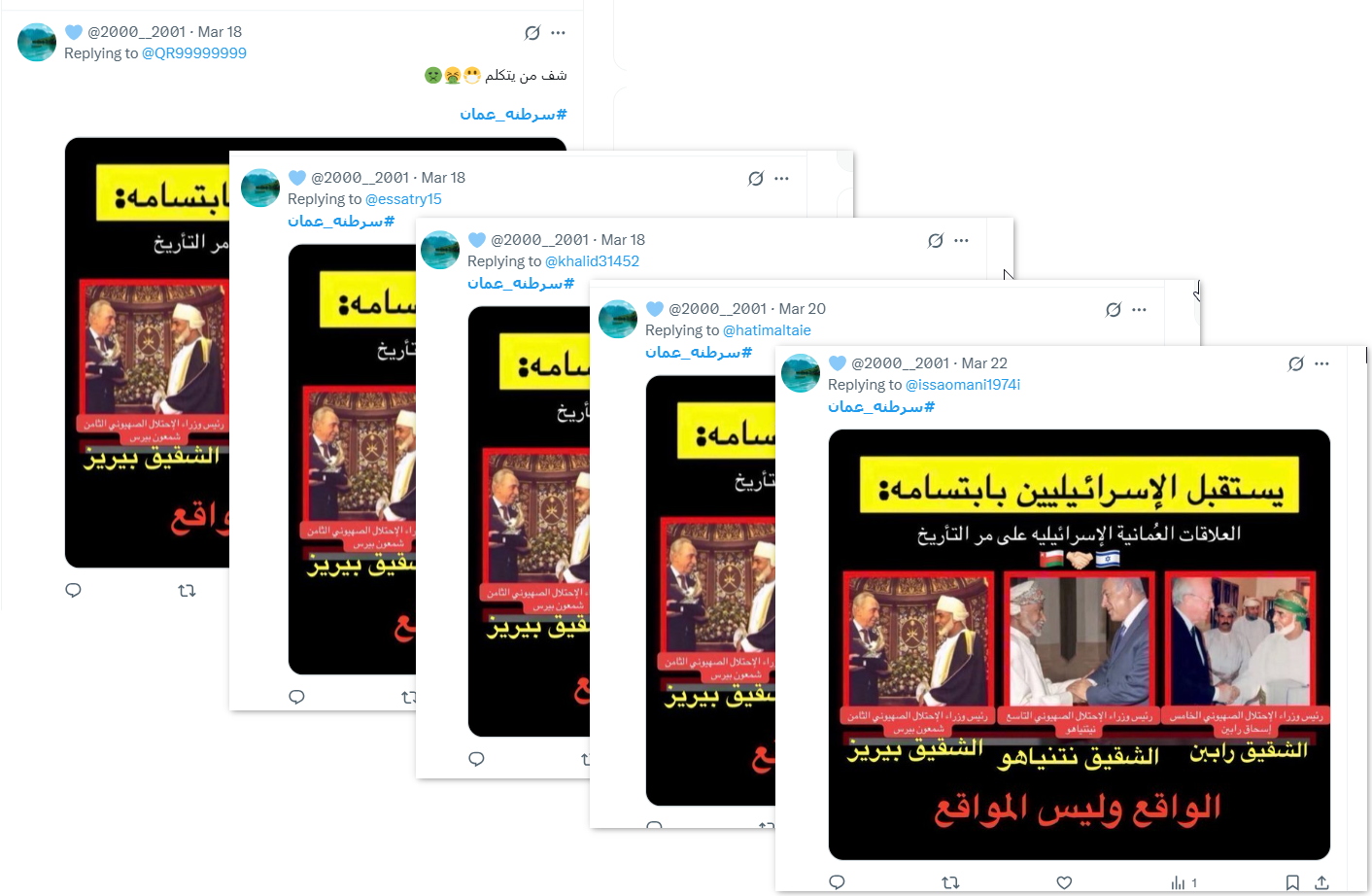
This was not the only comment; the same account (@2000_2001), which is active from Saudi Arabia, posted dozens of comments using the hashtag “Cancerous Oman”, thus beginning the online campaign against the Sultanate of Oman. This coincided with the Gulf Cooperation Council (GCC) issuing a statement on March 25, condemning the Iranian bombardment and the attacks carried out by armed Iraqi militias against Gulf states, and affirming their right to self-defense.
Digital campaign launched by pro-Israel accounts
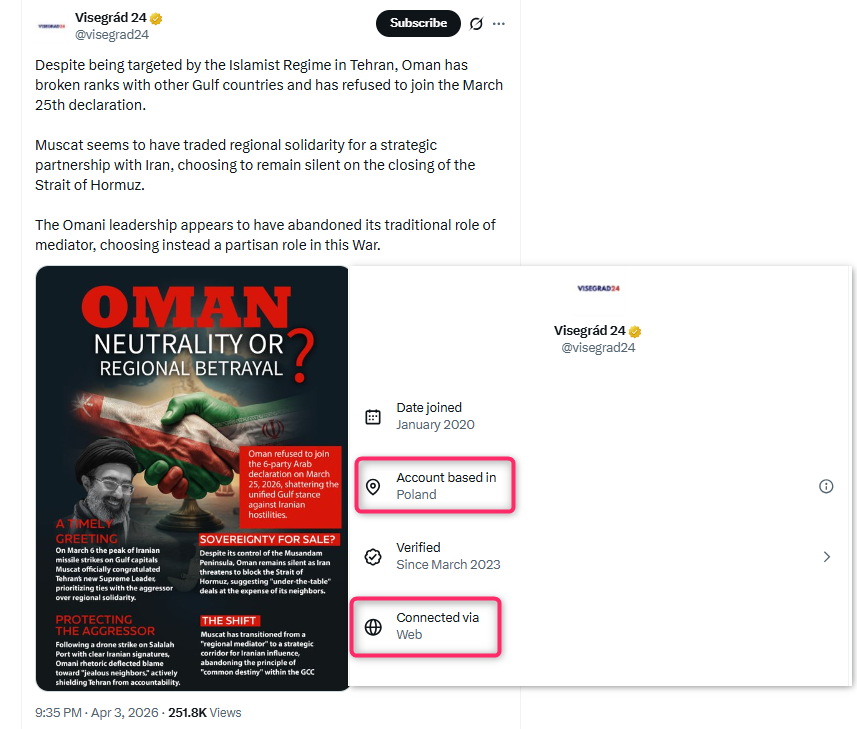
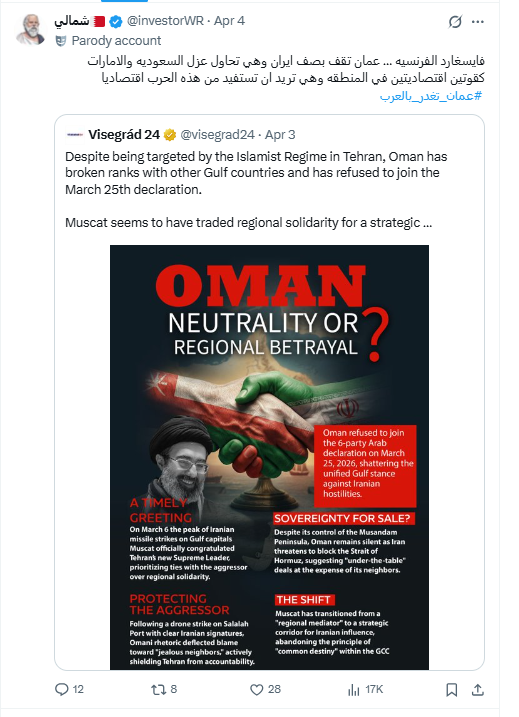
On April 3, a newly created pro-Israel account, "FaceGuard"—operating from Poland—accused the Sultanate of Oman of siding with Iran and coordinating via the Strait of Hormuz at the expense of Gulf interests. This accusation specifically stemmed from Oman's decision not to sign the aforementioned GCC statement.
On the same day, a satirical account named "Shamali" (@investorWR) reposted the tweet, identifying itself as "a Bahraini who loves the UAE," though transparency features showed it operates from West Asia, which usually refers to the UAE.
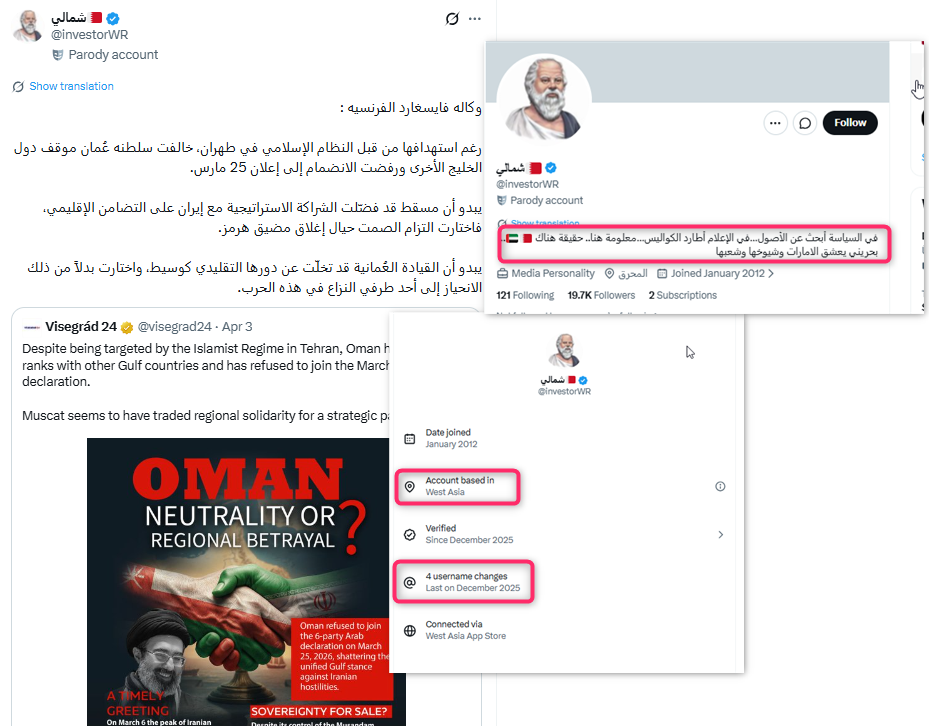
On the same day, a satirical account named "Shamali" (@investorWR) reposted the tweet, identifying itself as "a Bahraini who loves the UAE," though transparency features showed it operates from West Asia, which usually refers to the UAE.
Campaign Size and Spread
Over the last month, total posts containing the hashtags #سرطنة_عمان (Cancerous Oman) and #عمان_تغدر_بالعرب (Oman Betrays the Arabs) reached about 702 posts, but they achieved an estimated reach of 10.8 million and about 15,700 interactions.

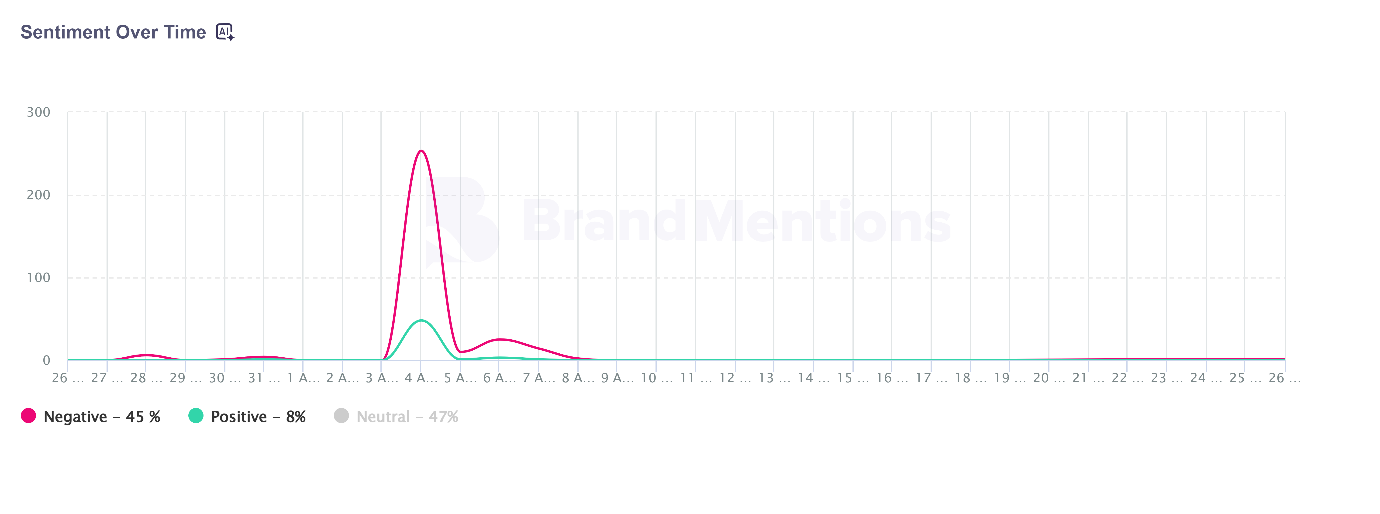
The campaign peaked on April 4. Posting peak coincided with the peak of reach, although it was noted that the posting curve exceeded the reach curve, suggesting the campaign relied on injecting a large number of posts, often as comments, without original content to expand the scope of spread.
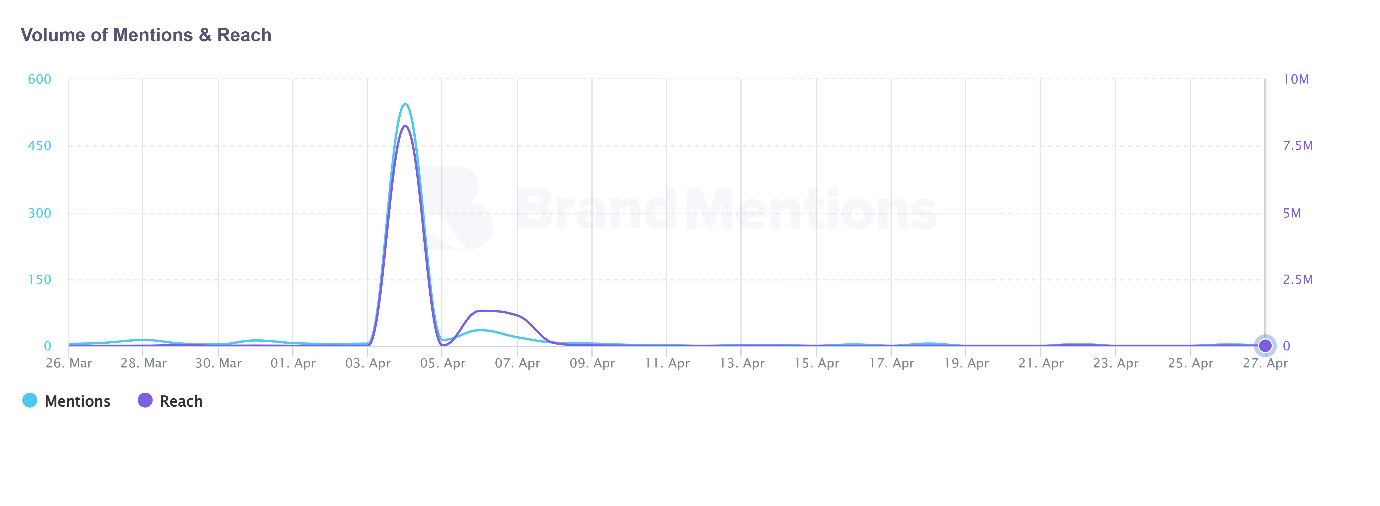
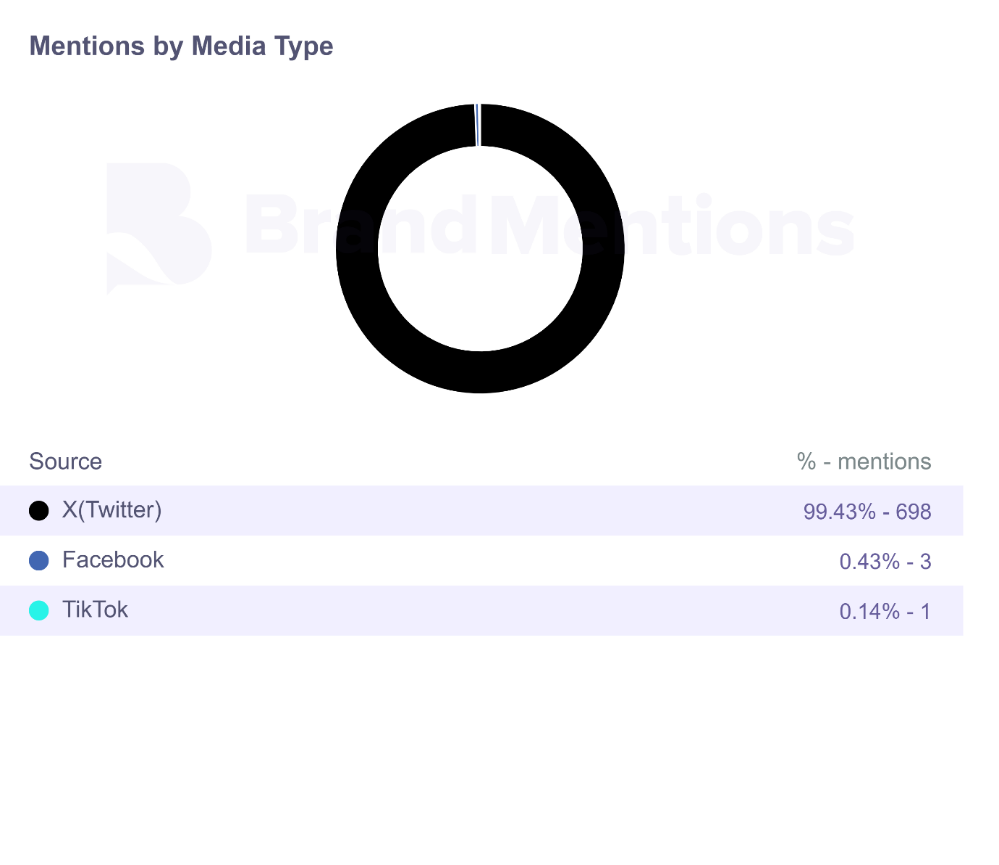
Most of these posts were published on X, with limited presence on Facebook and TikTok.
Sentiment and Hashtag Analysis
Analyses showed 45% of posts carried negative sentiment, versus 8% positive, while 47% were classified as neutral content.
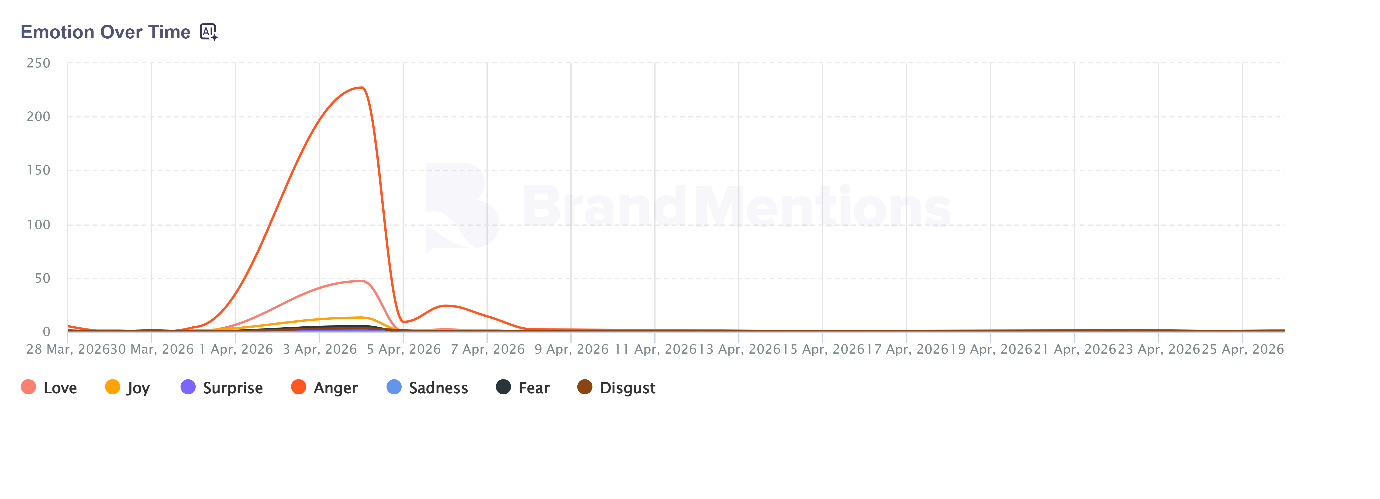
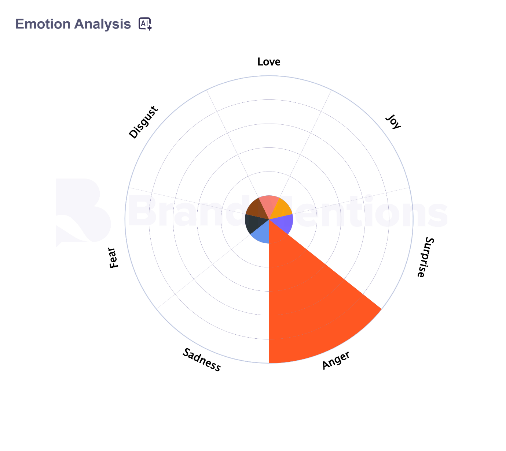
However, sentiment analysis showed a clear dominance of anger, as the posts sought to accumulate this feeling by repeating the same hashtags and accusations against the Sultanate of Oman.
This was linked to the list of most trending hashtags, where #سياسات_تغذي_الارهاب،(Policies that Feed Terrorism) topped the list followed by #حضرموت_تحتشد_خلف_عيدروس (Hadramaut Stands with Aidarus). These are two Yemeni hashtags that were used in posts also containing the hashtags “Cancerous Oman” and “Oman Betrays the Arabs”.
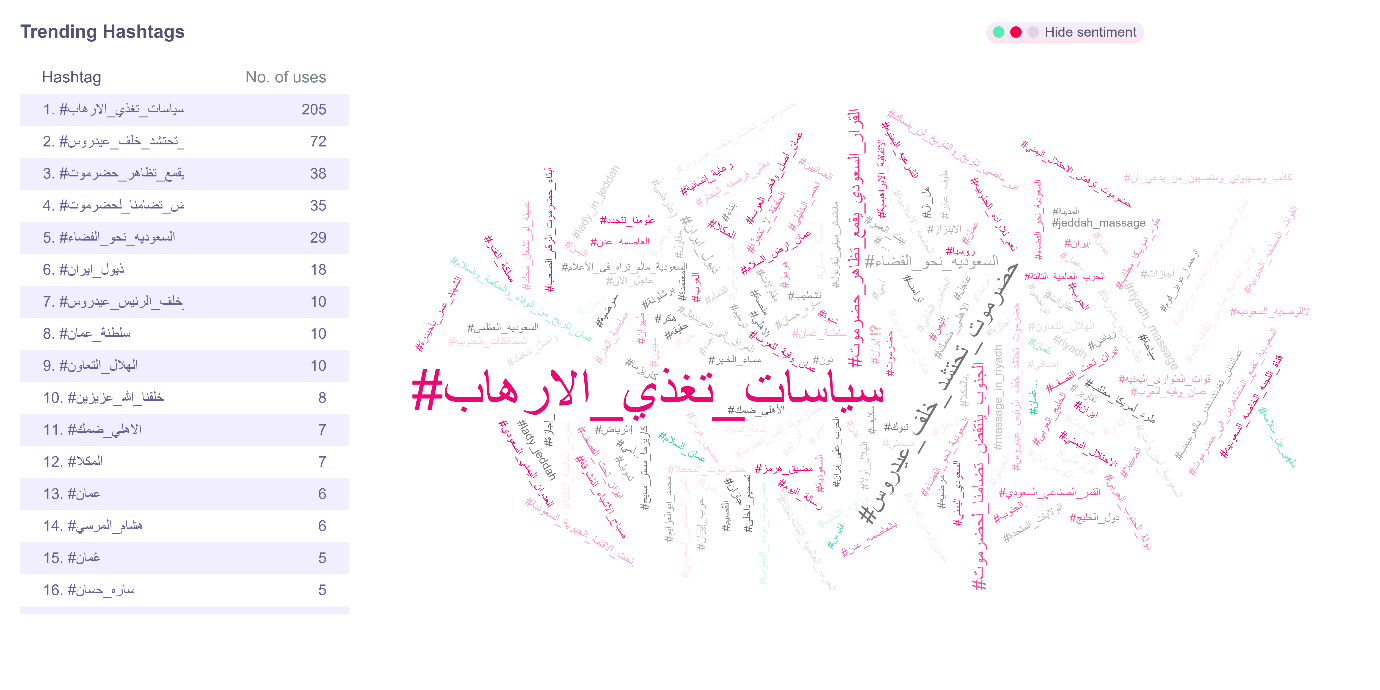
This indicates that Yemeni accounts, especially those supporting Aidarus Al Zoubaidi (who is backed by the UAE), merged campaign hashtags into their posts to increase their reach.
The hashtag #ذيول_إيران (Iran’s Lackeys) also appeared, used against groups linked to Iran in Iraq, Lebanon, and Yemen, in addition to media professionals and journalists who took neutral positions on Iranian policies.
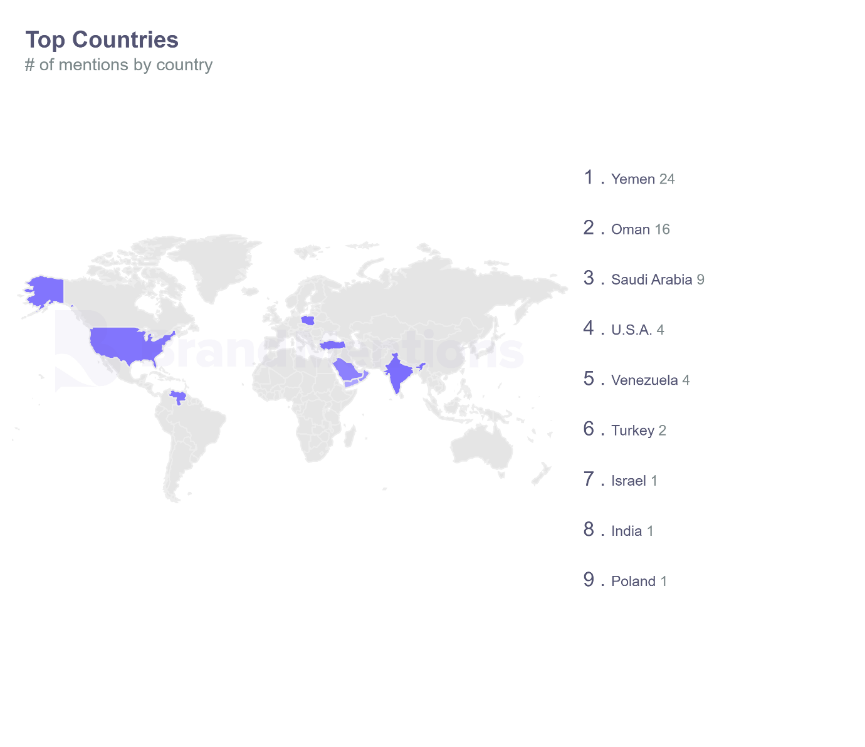
The geographic activity map showed that Yemen topped the list of participating countries, followed by Oman, then Saudi Arabia, with the note that this classification depends on geographic locations specified by the accounts themselves, which reduces the accuracy of the actual distribution.
Who is driving campaign amplification?
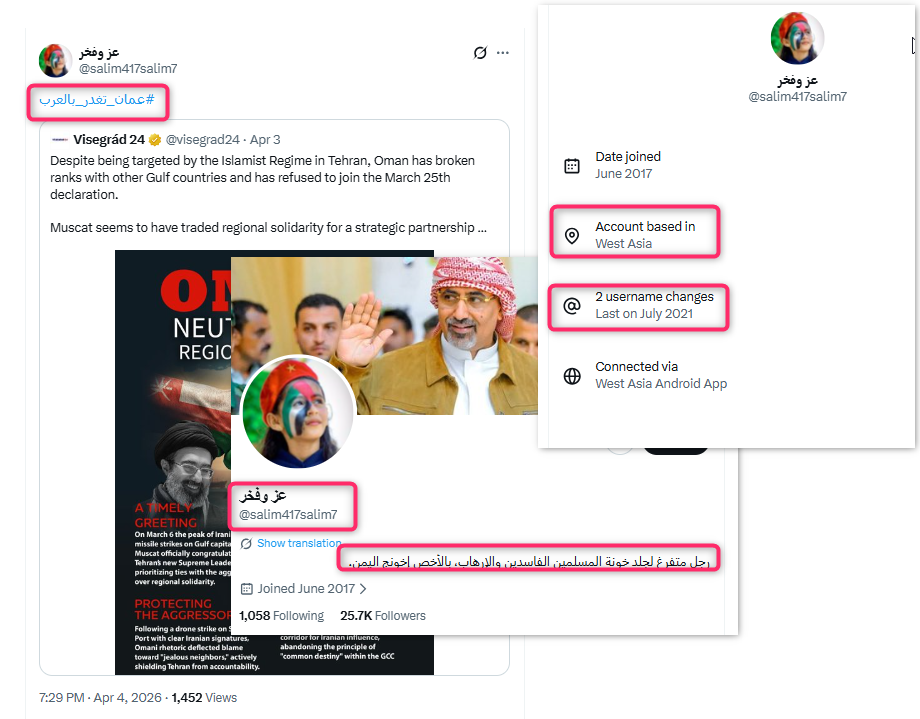
Analyses revealed that most accounts that amplified content against the Sultanate of Oman were Gulf accounts, including Saudi accounts, Yemeni accounts based in the UAE, or accounts supporting the Southern Transitional Council (STC) backed by the UAE.
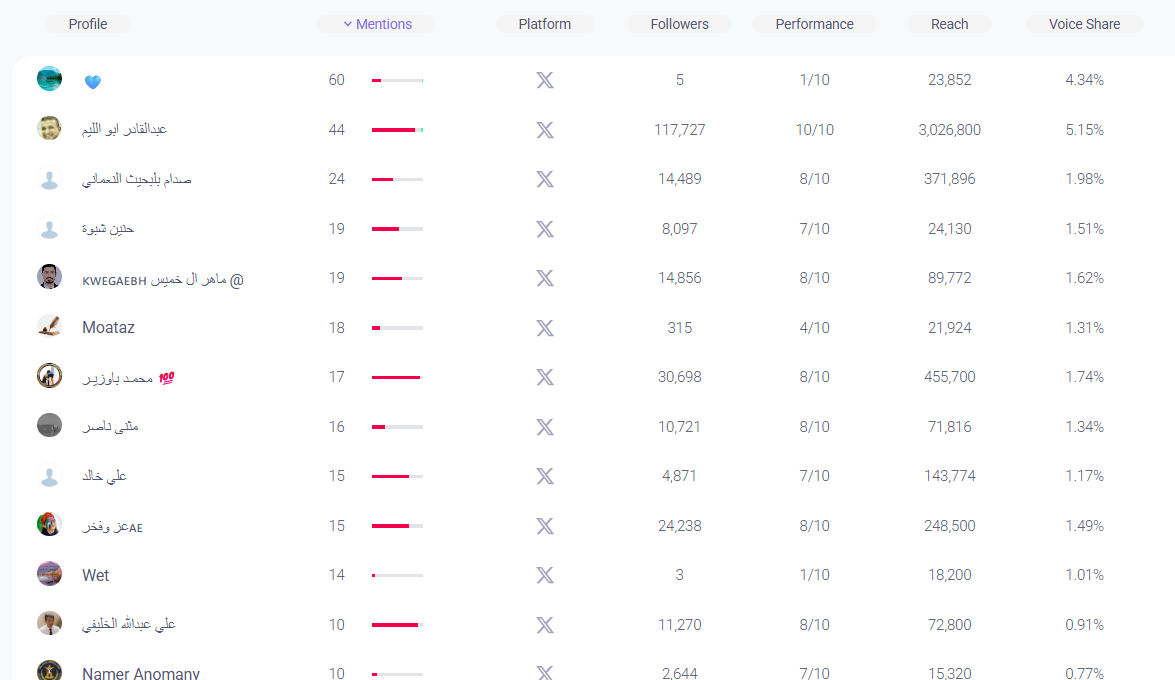
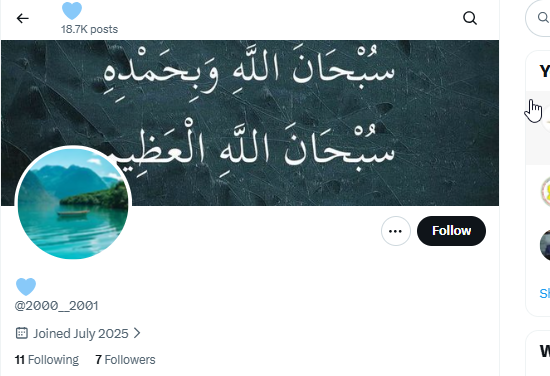
The list was led by @2000__2001, a newly created account operating from Saudi Arabia, created in July 2025. Despite being recently created, it posted 18,700 posts, averaging 62 posts per day over 301 days, a very high rate compared to human behavior, suggesting it is an automated account.
Next was the account "Abdulqader Abu al-Lim @qadir_qadi," a Yemeni account that posted 44 posts, focusing on supporting the STC and promoting the UAE, in addition to attacking Saudi Arabia.
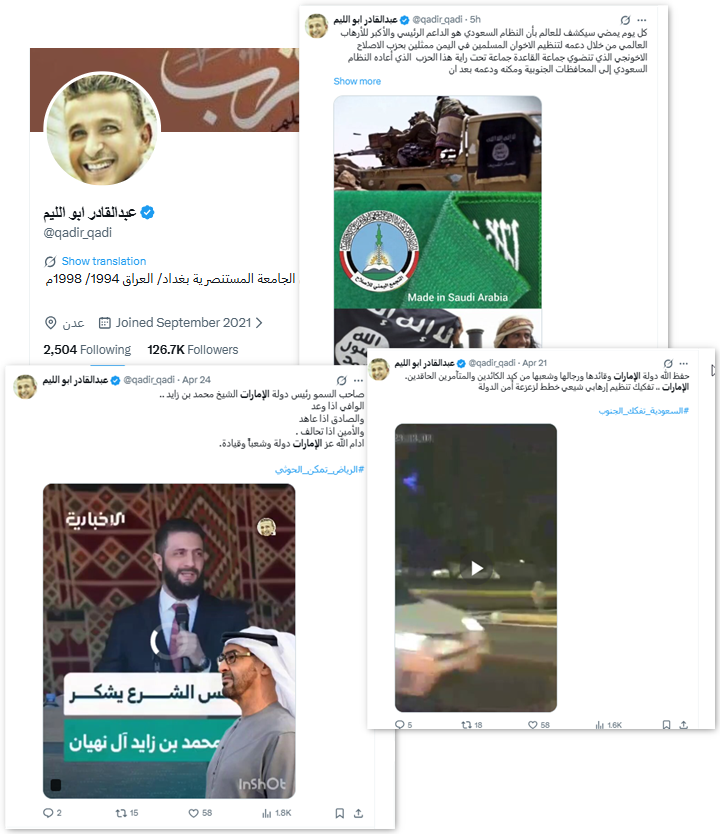
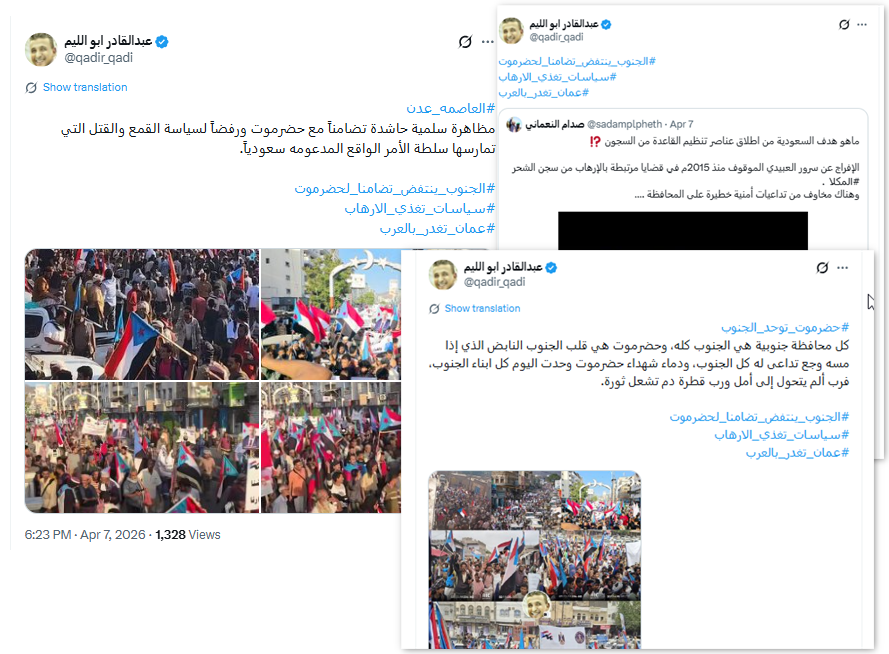
The account also used the hashtag “Oman Betrays the Arabs” in its posts related to the STC, explaining the presence of Yemeni hashtags in the campaign.
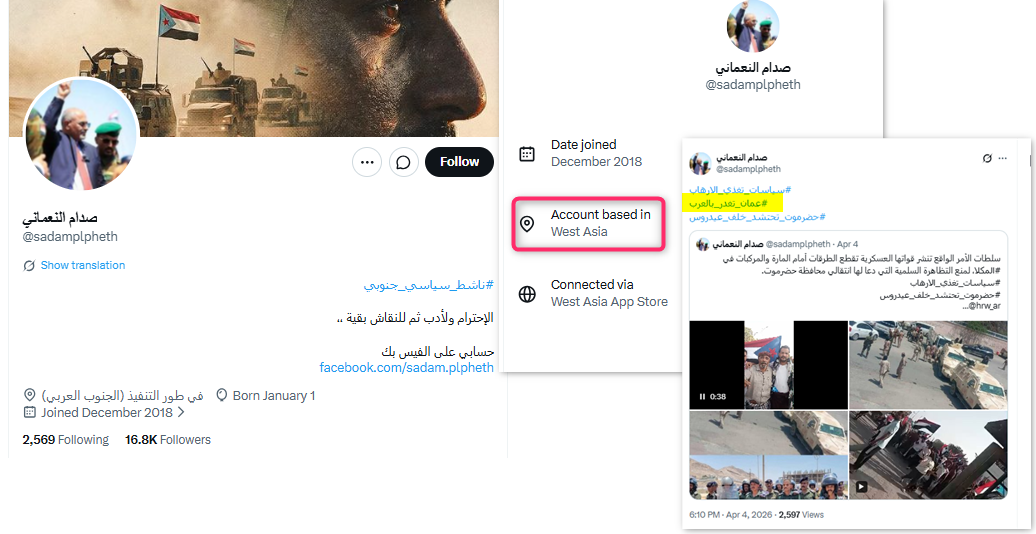
Similarly, the account "Saddam al-Nu'mani @sadamplpheth" was active, a Yemeni account supporting the STC and its leader Aidarus Al Zoubaidi, and posted 24 posts, using the same hashtag, noting that the account operates from West Asia (UAE).
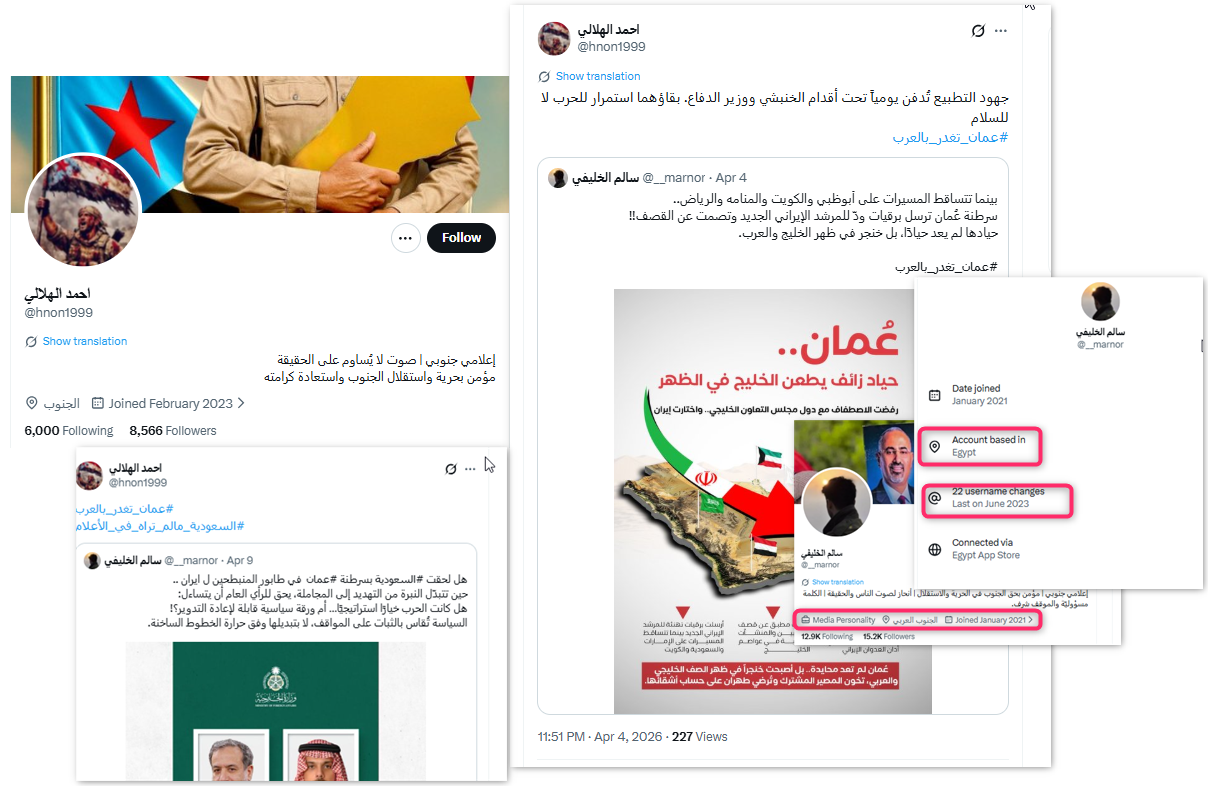
Also appearing was the account "Haneen Shabwa" (@hnon1999), which changed its name to "Ahmed Al Helali," a new Yemeni account supporting the STC. We noticed its interactions were linked to another Yemeni account called "Salem Al Khalifi," which operates from Egypt and has changed its username 22 times since 2021.
The rest of the accounts did not differ in their pattern. They were characterized by the traits of fake or inauthentic accounts, with a clear link to the political discourse supporting the STC, in addition to the participation of Israeli accounts, including journalist Eddie Cohen, who participated in amplifying the campaign.
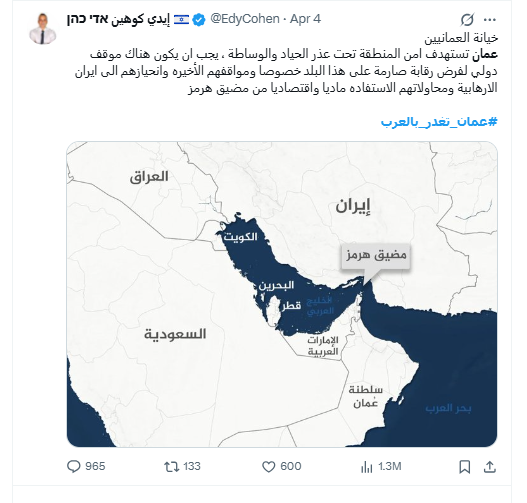
Omani Counter-Campaign
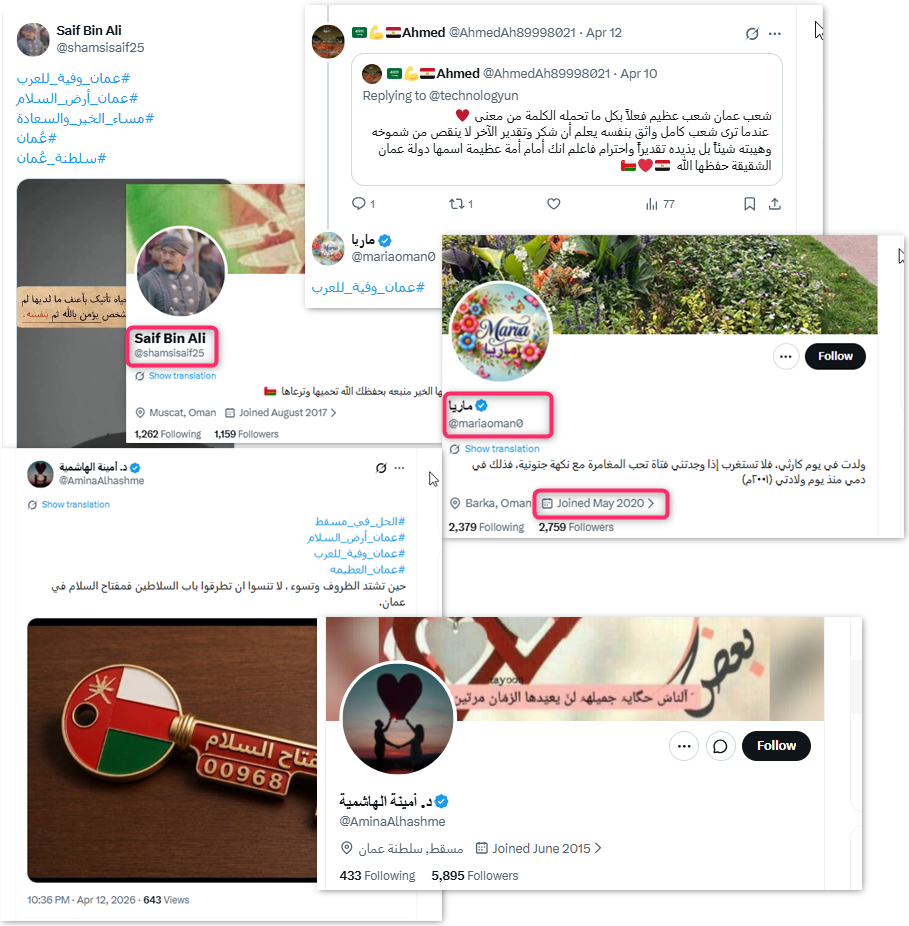
Conversely, a counter-campaign led by Omani accounts was active under the hashtag #عُمان_وفية_للعرب (Oman is Loyal to Arabs), aimed at denying accusations of betrayal and highlighting the Sultanate of Oman's foreign policy.
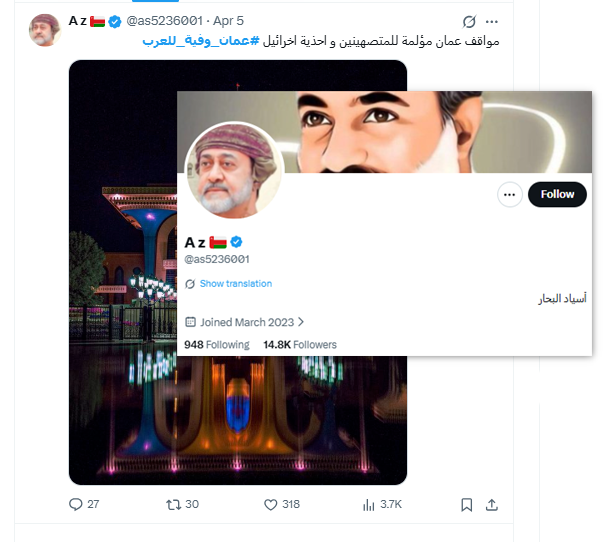
The hashtag began on April 5, one day after the campaign against the Sultanate started, and peaked on April 8 as the military escalation against Iran stopped.
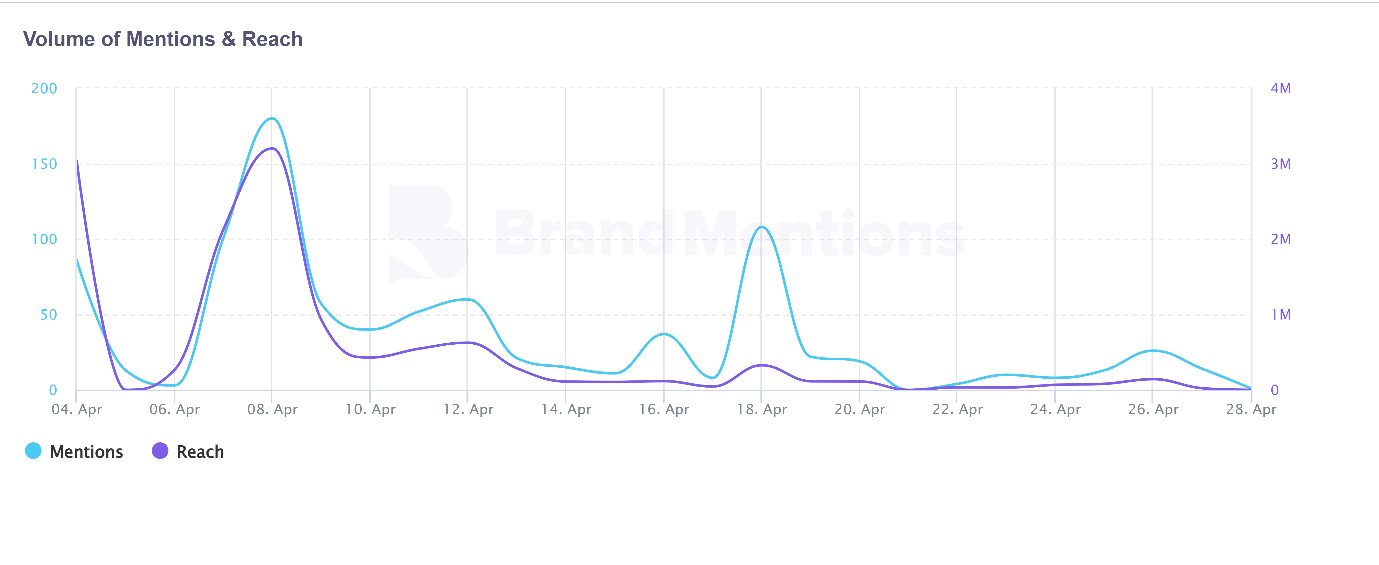
The campaign's total posts reached 909, achieving an estimated reach of about 12.8 million and 31.8 thousand interactions.

To reach these figures, the campaign relied on accounts that predominantly had the characteristics of fake accounts, which tried to promote the foreign policies of the Sultanate of Oman.
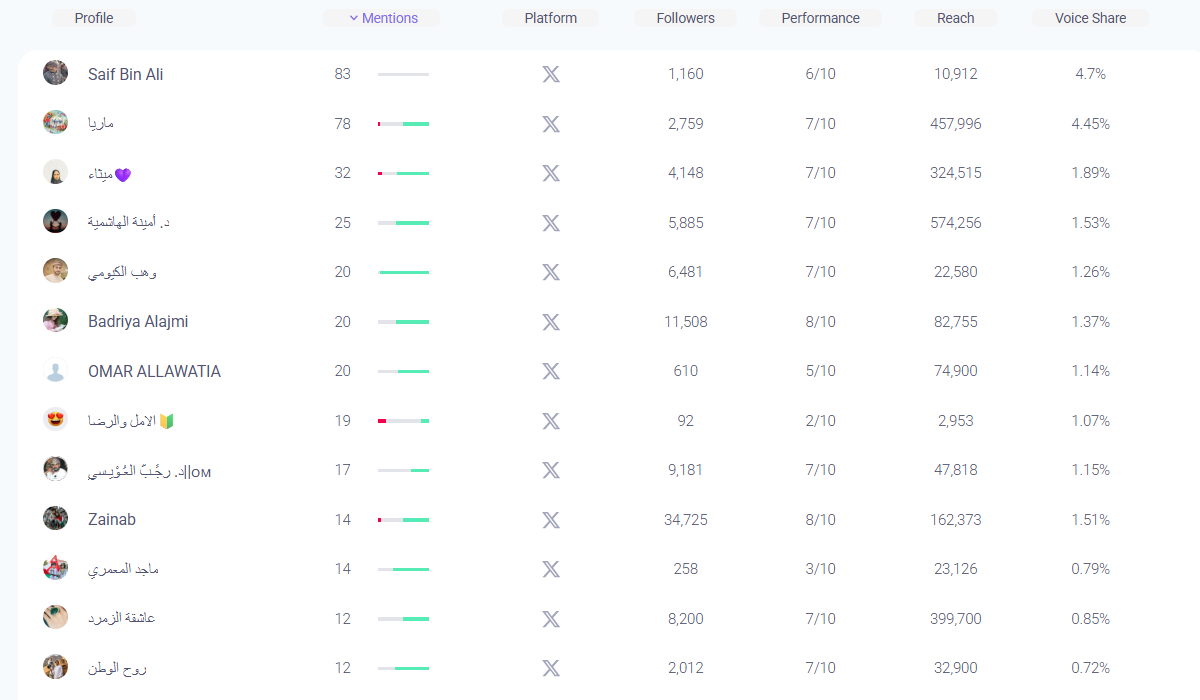
An examination of the most interacting accounts showed that they bore the characteristics of inauthentic accounts, such as the absence of personal photos and their focus on political content only without any personal dimension.
The results indicate a transformation of coordinated digital campaigns into tools of digital pressure and threats, as groups of fake accounts, alongside prominent real accounts like Eddie Cohen, sought to lead a coordinated discourse targeting the Sultanate of Oman.
In contrast, a counter-digital response appeared from Omani accounts, which also relied on networks of inauthentic accounts, reflecting a recurring pattern of mutual digital polarization in the Arab space.

Other Articles